
Low-Calorie Beer: A Guide to Lighter Brews
Learn how to identify low-calorie beers, compare ABV levels, and find the best light beer options for your lifestyle.
In the United States, a low-calorie beer is typically defined as having around 100 to 110 calories per 12-ounce (355ml) serving.
In the European Union (EU), there is no standardized definition for low-calorie beer. According to Regulation (EU) No 1169/2011, alcoholic beverages containing more than 1.2% alcohol by volume (ABV) are exempt from mandatory nutrition labeling, including calorie information.
Best Low-Calorie Beers (U.S. & International)
|
Beer Name |
Calories (per 12 oz) |
ABV |
Carbs |
Flavor Profile |
|
Michelob Ultra |
95 |
4.2% |
2.6g |
Crisp, light malt flavor |
|
Bud Light |
110 |
4.2% |
6.6g |
Mild hop bitterness, smooth finish |
|
Coors Light |
102 |
4.2% |
5g |
Refreshing with subtle maltiness |
|
Miller Lite |
96 |
4.2% |
3.2g |
Light-bodied with a balanced taste |
|
Amstel Light |
95 |
3.5% |
5g |
Smooth, slightly bitter European-style lager |
|
Corona Premier |
90 |
4.0% |
2.6g |
Crisp with mild citrus notes |
|
Heineken Light |
99 |
3.3% |
7g |
Malty with a hint of hops |
|
Guinness Draught (Surprisingly Low-Cal) |
126 |
4.2% |
10g |
Creamy with roasted malt flavors |
|
Oskar Blues One-y IPA |
100 |
4.0% |
5g |
Hoppy, citrusy, lower bitterness |
|
Dogfish Head Slightly Mighty IPA |
95 |
4.0% |
3.6g |
Fruity hops with a dry finish |
Where Do Beer Calories Come From?
The calorie content in beer comes primarily from alcohol and carbohydrates.
1.Alcohol (Ethanol) – The most calorie-dense component in beer, providing 7 calories per gram. Beers with higher ABV (alcohol by volume) have more calories.

2.Carbohydrates (Residual Sugars & Malt) – Derived from malted grains, contributing 4 calories per gram. Low-carb beers reduce this by fermenting more sugars into alcohol, leaving fewer residual carbs.
Since alcohol makes up most of a beer’s calorie count, low-calorie beers typically have a lower ABV (3-4%) to reduce overall calorie content.
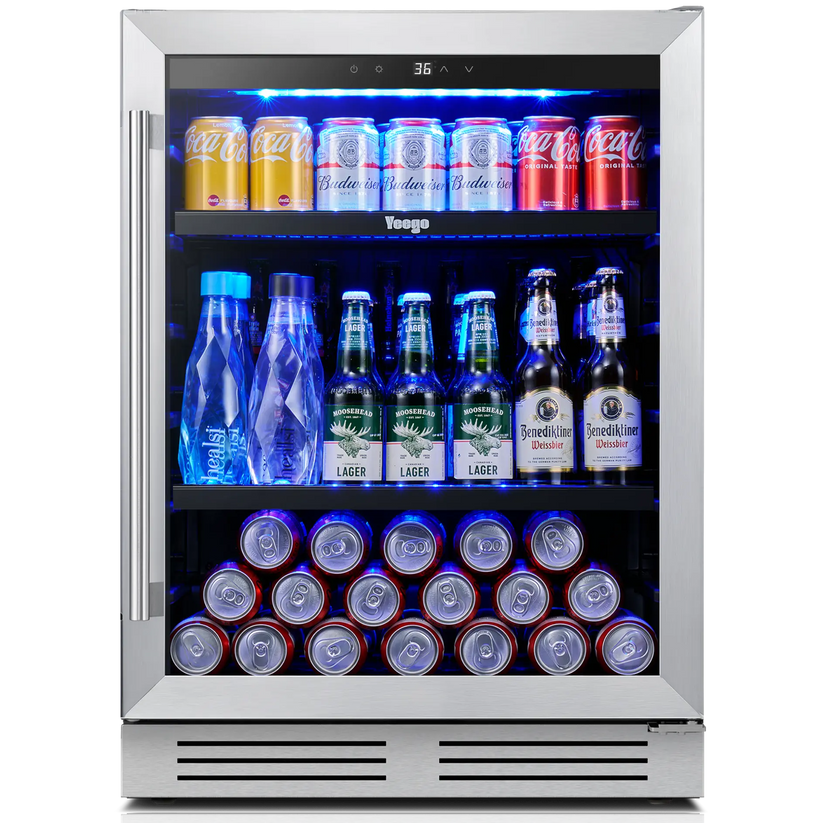
Yeego 24" Beverage Cooler
How Is Low-Calorie Beer Made?
While all beers are made using the same fundamental process, low-calorie beers are brewed with techniques that reduce carbohydrates and alcohol content. The brewing process follows these key steps.
1.Malting – Barley or other grains are malted (soaked, germinated, and dried) to develop enzymes that break down starches into fermentable sugars.
2.Mashing – The malted grains are mixed with hot water, converting starches into fermentable sugars, forming the "wort."
3.Boiling & Hopping – The wort is boiled, and hops are added for bitterness and aroma.
4.Fermentation – Yeast is added, converting sugars into alcohol and CO₂.
5.Conditioning & Filtration – The beer matures, and excess yeast or sediments are filtered out before packaging.
How to Identify a Low-Calorie Beer
Since definitions of "light" or "low-calorie" beer vary by region, here’s how to quickly identify one.
●Check the Label – In the U.S., beers labeled "light" or "lite" typically contain 100-110 calories per 12-ounce (355ml) serving. In the EU, calorie labeling is not mandatory for beers over 1.2% ABV, so information may not always be available.
●Research the Brand – Many breweries list nutritional details on their websites. For example, Budweiser Select 55 contains 55 calories per 12-ounce serving.
●Consider the Alcohol Content – Beers with lower ABV generally have fewer calories. Most light beers fall between 3-4% ABV, reducing calorie density.
Different countries and organizations define "low-calorie" or "light beer" differently, often based on alcohol content and calorie limits.
Beer Calorie Chart
|
Region/Country |
Definition & Standard for Low-Alcohol or Light Beer |
|
United States (TTB - Alcohol & Tobacco Tax and Trade Bureau) |
"Light beer" is not strictly defined by law, but it typically contains fewer than 110 calories per 12 oz. There is no ABV limit, but most are 4.2% ABV or lower. |
|
European Union (EU) |
“Low-alcohol beer” refers to beers with 0.5% - 1.2% ABV, while "light beer" usually means lower calories, without a strict definition. |
|
United Kingdom (UK Government & The Portman Group) |
"Low-alcohol beer" is defined as ≤1.2% ABV, while "reduced alcohol beer" must have at least 30% lower ABV than its full-strength version. "Light beer" has no legal calorie standard. |
|
Australia & New Zealand |
"Low-alcohol beer" refers to ≤3.0% ABV, while "light beer" is usually ≤2.5% ABV. There is no official calorie requirement. |
|
Canada (CFIA - Canadian Food Inspection Agency) |
"Light beer" must contain at least 25% fewer calories than the regular version of that beer brand. There is no universal ABV standard for light beer. |
|
Japan (National Tax Agency) |
"Happoshu" refers to beers with less than 67% malt content, which often have fewer calories. Low-malt beer or "third-category beer" (like Asahi Off) contains even fewer calories and lower ABV. |
How to Choose the Right One?
●For light and refreshing taste → Michelob Ultra, Coors Light, Corona Premier
●For a balanced, fuller flavor → Miller Lite, Heineken Light, Amstel Light
●For hop lovers → Dogfish Head Slightly Mighty, Oskar Blues One-y IPA
●For a smooth dark beer → Guinness Draught (surprisingly low-calorie for a stout!)
How to Keep Beer Fresh Longer
A lot of people focus on finding the right beer, but storage matters more than most realize. Even a good low-calorie beer can start to lose its crispness if it sits too long in the wrong conditions.
Heat is usually the biggest problem. Beer does not respond well to constant temperature swings, especially in garages, kitchens, or outdoor spaces where temperatures can rise quickly during the day. Over time, that affects carbonation, aroma, and overall flavor balance.
Light exposure is another issue, particularly for bottled beer. Direct sunlight and strong indoor lighting can gradually change the taste, which is why many breweries still prefer darker bottles for certain styles.
For everyday storage, consistency matters more than getting beer extremely cold. Most light beers and low-calorie lagers tend to taste best when kept properly chilled and stored at a stable temperature before serving. A cooler environment also helps preserve the clean, refreshing character that makes these beers enjoyable in the first place.
If you usually keep beer around for weekends, gatherings, or game nights, organizing your drinks in a dedicated cooling space can make a noticeable difference. It keeps cans colder for longer, avoids overcrowding in the kitchen refrigerator, and helps maintain a more consistent drinking experience overall.
At the end of the day, fresh beer simply tastes better. A little attention to storage goes a long way.
A Few Quick Answers
1. What’s the best way to keep low-calorie beer cold at home?
A consistent cooling environment matters more than simply making beer “very cold.” Dedicated beverage fridges help maintain stable temperatures without frequent fluctuations from opening a regular kitchen refrigerator.
2. Can beer lose flavor if stored improperly?
Yes. Heat, sunlight, and unstable temperatures can flatten carbonation and affect flavor over time, especially in lighter-style beers.
3. Does low-calorie beer taste different?
Some low-calorie beers have a lighter body and cleaner finish compared to traditional lagers or IPAs. Newer craft options, however, are getting much closer to full-flavor beer styles without the heavy calorie count.
4. What’s the best low-calorie beer for beginners?
Light lagers are usually the easiest starting point because they have a smoother taste and lower bitterness. Many people begin with classic American light beers before trying craft low-calorie options.
5. What is considered a “low-calorie” beer?
Most beers marketed as low-calorie typically contain around 90–120 calories per serving, though the exact number varies by brand and style.