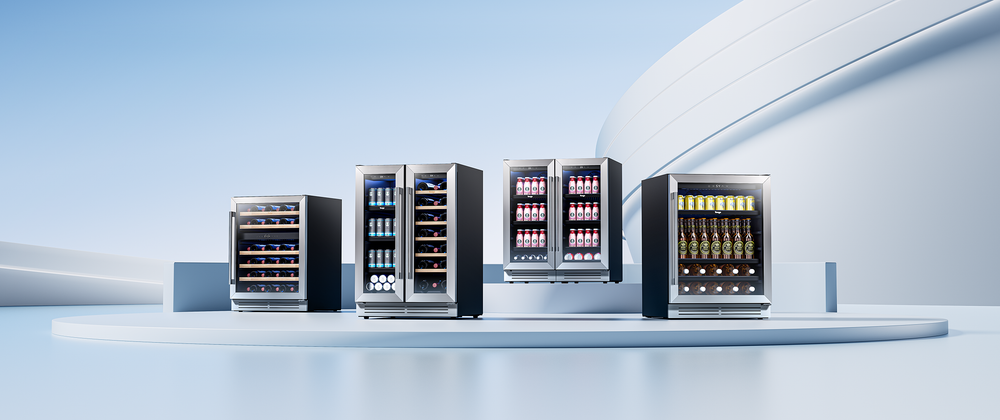

7 products


𝐍𝐞𝐞𝐝 𝐀𝐬𝐬𝐢𝐬𝐭𝐚𝐧𝐜𝐞?
𝐋𝐞𝐭 𝐮𝐬 𝐇𝐞𝐥𝐩

What size beverage cooler should I buy?

The right size depends on how much you usually store and where you plan to put it. For most homes, the best choice is the one that fits your daily habits, not just the space you have.

If you only keep a few drinks ready to chill — maybe 20 to 40 cans — a small under-counter unit is enough. For families or people who host often, a medium cooler that holds 60 to 120 cans gives more flexibility. Larger freestanding models are better for big households, offices, or entertainment spaces.

It’s also worth thinking ahead. Most people end up wanting a bit more room once they start using it, so getting a slightly larger size than you think you need often works out better.

Finally, make sure to check the cooler’s ventilation type before buying — built-in models need space to breathe at the front, while freestanding units need airflow around the sides and back.

What’s the difference between a beverage cooler and a regular mini fridge?

They might look similar, but they’re not built for the same job. A beverage cooler is meant for drinks — keeping them cold and ready to serve — while a mini fridge is really more for food storage.

The biggest difference is temperature and consistency. Beverage coolers usually stay between 30°F and 60°F (−1–15°C), which is cold enough for any drink but won’t freeze cans or bottles. Mini fridges can dip lower and fluctuate more often.

Most beverage coolers now use fan cooling, so the air moves evenly around every shelf. That way, everything inside stays at the same chill level. Many also have insulated glass doors, which help hold the cold in and let you see what’s inside without opening the door.

So, if your main goal is to keep drinks at a steady,a beverage cooler just does that job better.

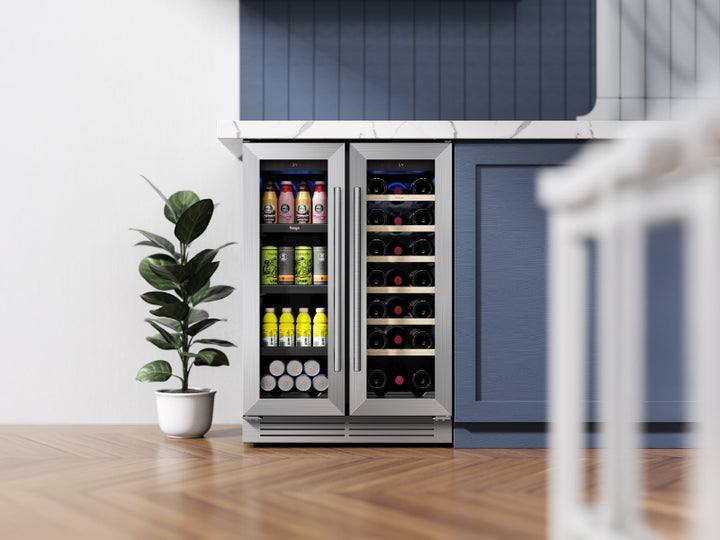
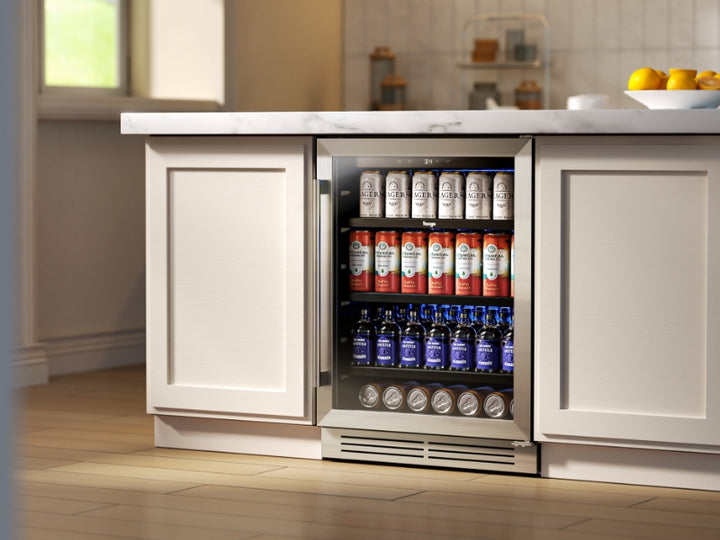
Can a beverage cooler be built-in under the counter?

Yes, it can — but only if the model is made for it. I’ve seen plenty of people try to slide a freestanding cooler under the counter, and that’s usually where the trouble starts.

The main thing is ventilation. Built-in units push warm air out from the front, so they can handle tight spaces without getting too hot. Freestanding ones send the heat out from the back or sides, and if you block that airflow, the unit will overheat and lose cooling efficiency.

Before buying, it’s worth asking the seller if the model supports built-in use and what kind of clearance space it needs. Usually, leaving a few inches at the back and sides is enough. It doesn’t sound like much, but that little bit of space makes a big difference in how well the cooler runs and how long it lasts.

Can I store beer, soda, and wine in the same beverage cooler?

Beer and soda can share the same cooler without any problem — they both like it cold, usually around 35°F to 40°F (1.5–4°C).

Wine is a bit different. Its ideal storage temperature is higher, usually between 50°F and 60°F (10–15°C). When it’s kept too cold for a long time, the moisture inside the bottle can seep into the cork, and in low temperatures, that cork may crack. Once that happens, air gets in and the wine starts to oxidize faster, which can affect both the aroma and taste.

So while beer and soda can stay together, it’s better to keep wine in a separate space or in a dual-zone cooler where you can set different temperatures for each type of drink.

Do beverage coolers have adjustable shelves?

Most of them do, yes. Almost every modern beverage cooler comes with adjustable or removable shelves, so you can change the layout depending on what you’re storing.

Over the years, I’ve seen people run into space issues simply because they didn’t realize the shelves could move. If you’re storing tall bottles — like sparkling water or craft beer — just slide one shelf out or lower it a notch, and it’ll fit fine.

Some models use wire racks that can flex a little, while others have solid metal shelves for better support. It’s always good to check how sturdy they feel, especially if you plan to store heavier glass bottles.

So yes, most beverage coolers are quite flexible. You can adjust the shelves to make the best use of space, whether it’s cans, bottles, or a mix of both.

Are beverage coolers noisy?

Not really, but it depends on the model and where you put it. Most modern beverage coolers run pretty quietly — usually around 40 to 45 decibels, which is about the level of a quiet room. You’ll hear a soft hum when the compressor turns on, and that’s normal.

From what I’ve seen, noise levels mostly come down to how the cooler is installed. When it’s placed on an uneven surface or pushed too tight against the wall, the vibration gets louder. Leveling the feet and leaving some space around the sides usually fixes it.

Units with inverter compressors tend to be even quieter, since they adjust their speed smoothly instead of turning on and off abruptly. In most homes, the sound blends into the background, especially if the cooler’s in a kitchen or bar area.

How long does a beverage cooler last?

A good beverage cooler can last quite a while — usually around 8 to 12 years if it’s used and maintained properly. I’ve seen some run even longer when they’re kept clean and well-ventilated.

The biggest factors that affect lifespan are where it’s placed and how it’s taken care of. When the cooler has enough space for air to flow around it, the compressor doesn’t have to work as hard. Dust and heat buildup are what usually wear a unit out early.

It also helps to clean the coils every few months and check that the door seal is tight. These small things keep the cooling system efficient and prevent unnecessary strain on the motor.

So, while there’s no exact number for everyone, a well-maintained cooler can easily last over a decade without major problems.

Do beverage coolers need regular cleaning?

Yes — and I can tell you, it matters more than most people think. A beverage cooler might look fine from the outside, but over time, dust builds up around the vents and coils, and that’s when problems start.

I’ve seen coolers lose cooling power simply because the back was packed with dust. Cleaning it every few months keeps the airflow clear and the compressor from overheating. A quick wipe inside helps too — remove the shelves, clean up spills, and make sure the door seal stays dry and tight.

Also, check the space around it. If the cooler is pressed too close to a wall, the heat can’t escape. A few inches of breathing room and a bit of regular cleaning go a long way toward keeping it quiet, steady, and reliable for years.

Is a beverage cooler necessary if I already have a fridge?

Not always. If your regular fridge has plenty of space and you only keep a few drinks at a time, you probably don’t need a separate beverage cooler. But for a lot of people, the main fridge ends up full of food, sauces, and leftovers — and drinks get pushed to the back or take up too much room.

A beverage cooler keeps everything in one place and at the right temperature for drinks. Regular fridges are colder, often around 34°F (1°C) or below, which can make some beverages — especially beer or sparkling water — too icy. A cooler keeps them between 35°F and 45°F (1.5–7°C), cold but not frozen.

It’s also about convenience. If you host often or have family members who grab drinks all day, a dedicated cooler helps a lot. It keeps the main fridge organized and extends the life of both appliances by reducing how often each one is opened.

Can I use a beverage cooler for food storage?

You could, but it’s not something I’d recommend. Beverage coolers are made for drinks, not food. They keep a steady chill, usually between 35°F and 45°F (1.5–7°C), which works great for cans and bottles — but it’s a bit too warm for things like meat, dairy, or leftovers.

Over the years, I’ve seen people try to use them like a mini fridge, and the food just doesn’t keep well. The air inside a beverage cooler moves more to keep temperature even, which actually dries food out faster.

If you just want to keep snacks, fruit, or bottled water cool for a short time, that’s fine. But for anything that spoils easily, you’ll want to stick with a regular refrigerator. The cooler’s really meant to keep drinks ready to serve, not to preserve food.