
9 products


𝐍𝐞𝐞𝐝 𝐀𝐬𝐬𝐢𝐬𝐭𝐚𝐧𝐜𝐞?
𝐋𝐞𝐭 𝐮𝐬 𝐇𝐞𝐥𝐩

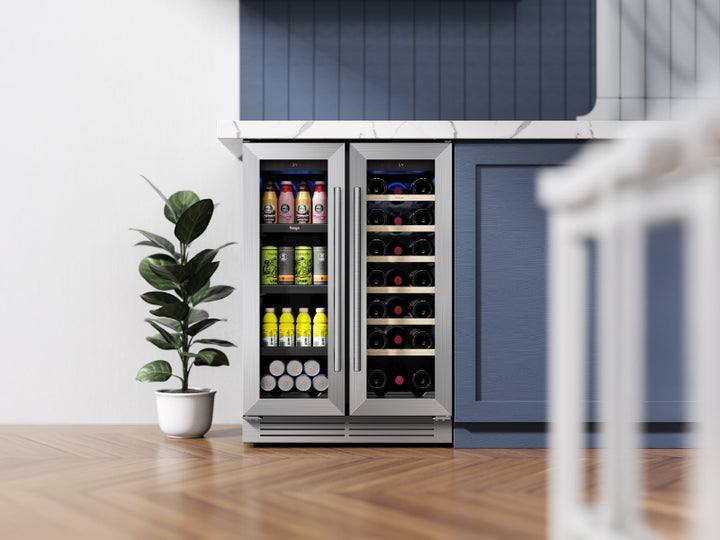
What is a French-style wine and beverage fridge?

It’s basically a fridge with two doors that open from the middle, kind of like a French-door refrigerator. One side’s made for wine and the other for drinks — beer, soda, sparkling water, things like that.

The nice part is the two independent temperature zones. Each side can be set separately depending on what you’re storing. For example, red wine usually does best around 60–65°F (15–18°C), while the beverage side can stay colder, around 35–45°F (1.5–7°C), which keeps drinks nicely chilled.

So, a French-style fridge lets you store wine and other beverages together while keeping each at its ideal temperature without affecting one another.

What’s the difference between a French wine beverage fridge and a regular wine fridge?

They might look similar, but they’re made for different needs. A regular wine fridge is built just for wine — it keeps a steady temperature, usually a bit warmer, and often has wooden shelves to protect the bottles and reduce vibration. It’s all about long-term storage and keeping wine at its best.

A French-style wine and beverage fridge, on the other hand, is more of a shared space. It has two sections with independent temperature controls, so one side can stay around 60–65°F (15–18°C) for wine, while the other side runs cooler — about 35–45°F (1.5–7°C) — for beer, soda, or other drinks.

So if you mainly collect wine and want the bottles to age well, a wine fridge makes more sense. But if you keep both wine and everyday drinks and want everything in one place, the French-style model is the more practical choice.

How many bottles or cans can a French wine beverage fridge hold?

It really depends on the size, but here’s a good example. The Yeego WF24 French-style wine and beverage fridge can hold about 20 Bordeaux bottles on the wine side and roughly 60 cans of 12oz drinks on the other.

If you store Burgundy bottles or other non-standard sizes, you’ll probably need to move the shelves around a bit. The racks are adjustable, so it’s easy to make room for wider bottles or taller cans.

Can a French wine beverage fridge be installed as built-in or freestanding?

Yeah, most French-style wine and beverage fridges can be set up either built-in or freestanding. The key thing is ventilation. Built-in models are designed with front vents so they can release heat even when installed under a counter.

If you’re using it freestanding, it just needs a bit more open space around it so the heat can escape properly. Putting a freestanding model into a tight cabinet isn’t a good idea — it’ll run hotter and wear out faster.

Before you buy, it’s always worth checking with the seller if the model supports built-in installation and how much clearance it needs around the sides and back for airflow.

Does it come with UV protection and humidity control?

Yeah, most French-style wine and beverage fridges do. They usually come with double-layer LOW-E glass doors that block UV light and help keep the inside temperature steady. It’s not completely dark inside, but the glass filters out most of the sunlight that can mess with wine quality over time.

As for humidity, these fridges keep things fairly balanced — usually somewhere around 50% to 70%. That’s enough to stop corks from drying out and to keep your wine in good shape. It’s not as precise as a full wine cellar, but for home use, it works just fine.

Are the shelves adjustable for larger bottles?

Yeah, most French-style wine and beverage fridges come with adjustable or removable shelves. The racks are usually designed to fit standard Bordeaux bottles, but if you’ve got something bigger — like Burgundy bottles, Champagne, or magnums — you can slide or take a shelf out to make room.

The tracks are built with a bit of flexibility, so you can move them up or down depending on what you’re storing. Just make sure not to block the airflow inside; that’s what keeps everything evenly cooled.

Do I need to clean the French wine beverage fridge regularly?

Yeah, you definitely should. It doesn’t need to be spotless all the time, but a good clean every month or two keeps it running smoothly and helps it last longer.

Here’s what usually works:

Inside: unplug it, take everything out, and wipe down the walls and shelves with a soft cloth and a diluted neutral cleaner.

Door seals: wipe them with a damp cloth from time to time — it keeps the gasket soft and sealing properly.

Outside: use a soft cloth to wipe the surface; never spray or hose it directly.

Vent or condenser area: every 3–6 months, clean the back or bottom vent with a vacuum or soft brush to remove dust.

Do I need to clean the wine fridge regularly?

After working with wine fridges for years, one thing’s clear — they last longer when you take care of the small details. Most problems I’ve seen come from poor placement or a lack of regular cleaning.

First, placement really matters. A wine fridge should always sit on a flat, stable surface with open space around it. A few inches on the sides and back helps the heat escape and keeps the compressor from running too hard. If it’s pushed too close to the wall, it’ll stay warm inside and wear out faster.

Second, don’t overload it. When bottles are packed too tightly, cold air can’t move evenly. You’ll end up with warmer spots inside, and that’s not good for long-term storage. Leave a little room between bottles — it makes a big difference.

As for cleaning, I’ve always told people to make it a habit. Once a month, wipe the shelves and inside walls with a soft cloth, and clear the dust off the coils at the back. The coils are what keep the fridge cool; once they’re covered in dust, the system has to work much harder.

It’s also smart to check the door seal. If it’s cracked or not closing tight, you’ll lose cold air without realizing it. Replacing the seal is cheap and easy, and it can save the compressor years of extra work.

Taking a few minutes now and then keeps the fridge steady, quiet, and reliable for a long time.