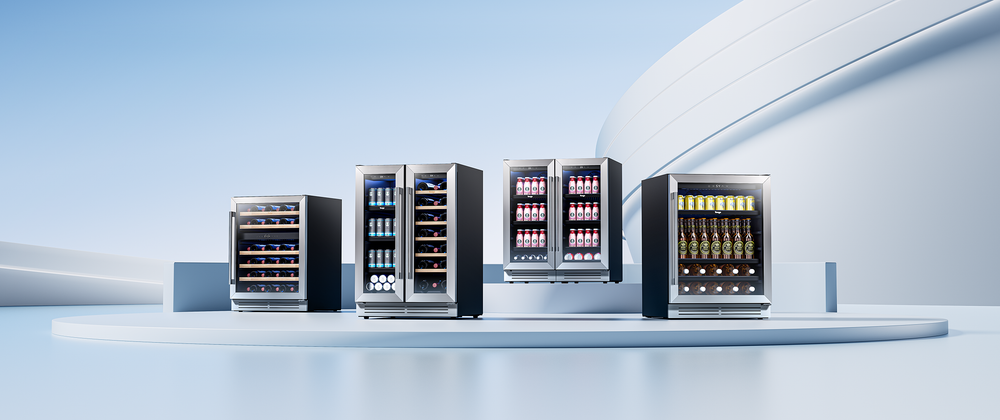

Wine Fridge vs Beverage Fridge: Which Should You Buy?
Wine Cooler vs Beverage Cooler: Are They the Same Thing?
If you've spent any time shopping for drink storage appliances, you've probably noticed that the terms wine cooler, wine fridge, beverage cooler, and beverage fridge are often used interchangeably. That can make it difficult to tell whether these products are actually different or simply marketed under different names.
In most cases, a wine cooler and a wine fridge refer to the same type of appliance. Both are designed to store wine at stable temperatures that help preserve flavor, aroma, and overall quality. Many models also include features such as low-vibration cooling systems, UV-resistant glass, and shelving designed specifically for wine bottles.

The same idea applies to beverage coolers and beverage fridges. These products are generally intended for storing canned drinks, bottled water, beer, soda, and other ready-to-drink beverages. They typically operate at colder temperatures than wine-focused units and use adjustable shelving to accommodate a variety of drink sizes.
Where confusion often arises is that manufacturers do not always follow the same naming conventions. One brand may market a product as a wine cooler, while another describes a nearly identical unit as a wine fridge. Likewise, beverage cooler and beverage fridge are often used to describe the same category of appliance.
The more important distinction is not the name itself, but the appliance's intended purpose. A wine-focused unit is designed around the storage needs of wine, while a beverage-focused unit is optimized for chilling everyday drinks. Looking at temperature range, shelf configuration, and storage design will usually tell you far more than the label on the door.
For shoppers comparing options, it helps to think of wine cooler vs. wine fridge and beverage cooler vs. beverage fridge as terminology differences rather than entirely separate product categories. The real decision is whether you need storage tailored to wine, beverages, or a combination of both.
Temperature Range
- Wine Fridge: Designed for optimal wine storage, maintaining a consistent temperature between 45°F and 65°F (7°C to 18°C). This range protects wine flavors and allows proper aging.
- Dual-zone wine fridges: Offer separate settings for red and white wines.
- Beverage Fridge: Operates at lower temperatures than wine fridges. Ideal for sodas, beers, and other drinks, with a temperature range of 35°F to 50°F (2°C to 10°C) for quick chilling.
- Regular Refrigerator: Typically operates at 37°F to 40°F (3°C to 4°C), which is suitable for food but usually too cold for proper wine storage.
| Comparison Factor | Wine Fridge | Beverage Fridge | Regular Refrigerator |
|---|---|---|---|
| Temperature Range | 45°F - 65°F (7°C - 18°C) | 35°F - 50°F (2°C - 10°C) | 37°F - 40°F (3°C - 4°C) |
| Humidity Control | Around 50% – 70% | No | No |
| UV Protection | UV-resistant glass door | UV-resistant glass door | No UV Protection |
| Vibration | Low-vibration | Low-vibration | Higher vibration |
| Purpose | Store, age, and preserve wine properly | Best for chilling soda, beer, and other beverages | For everyday food and drink storage |
Humidity Control
- Wine Fridge: Maintains humidity levels around 50%–70%, helping prevent corks from drying out and protecting wine from oxidation.
- Beverage Fridge: No dedicated humidity control is needed since most beverages are sealed.
- Regular Refrigerator: Low humidity may dry out wine corks over time, which can affect wine quality.
Vibration and Airflow
- Wine Fridge: Features low-vibration compressors or thermoelectric cooling to reduce sediment disturbance and help preserve flavor.
- Beverage Fridge: Usually uses standard compressor cooling, which works well for canned or bottled drinks. Premium models may include inverter compressors for quieter, more stable cooling.
- Regular Refrigerator: Stronger compressor cycles may create more vibration, which is not ideal for long-term wine storage.
Shelving Design
- Wine Fridge: Equipped with horizontal wooden or metal racks that hold wine bottles securely and reduce movement.
- Beverage Fridge: Comes with adjustable flat shelves designed for cans and bottles.
- Regular Refrigerator: Uses general-purpose shelves and compartments that are not optimized for wine bottle storage.

Door Design and UV Protection
- Wine Fridge: Often features UV-resistant glass doors to help protect wine from light exposure.
- Beverage Fridge: Usually has clear glass doors for display. Higher-end models may include UV-resistant double-pane glass for better protection.
- Regular Refrigerator: Typically has solid doors or non-UV glass doors, making it less suitable for wine storage.
Purpose and Use Case
- Wine Fridge: Best for wine collectors and enthusiasts who want to store, age, and preserve wine properly.
- Beverage Fridge: Best for chilling soda, beer, sparkling water, and other drinks in entertainment spaces, kitchens, offices, or home bars.
- Regular Refrigerator: Designed for everyday food and drink storage, not specialized wine or beverage storage.
Cooling Technology
- Wine Fridge: Uses precise cooling systems such as inverter compressors or thermoelectric cooling to maintain stable temperatures.
- Beverage Fridge: Focuses on fast cooling for ready-to-drink beverages.
- Regular Refrigerator: Prioritizes general food preservation rather than specialized temperature control.

Which One Should You Choose?
- Choose a Wine Fridge if you need precise temperature and humidity control for wine storage and aging.
- Choose a Beverage Fridge if you want quick access to chilled drinks like soda, beer, sparkling water, or bottled beverages.
- Choose a Regular Refrigerator for everyday household food and drink storage.
- If you need storage for wine, beer, and other beverages, a dual-zone fridge can offer separate temperature zones for different drinks.
Investing in the right appliance depends on your needs. A wine fridge is essential for wine lovers seeking optimal storage, a beverage fridge is ideal for versatile drink storage, and a regular refrigerator covers everyday food and drink needs.
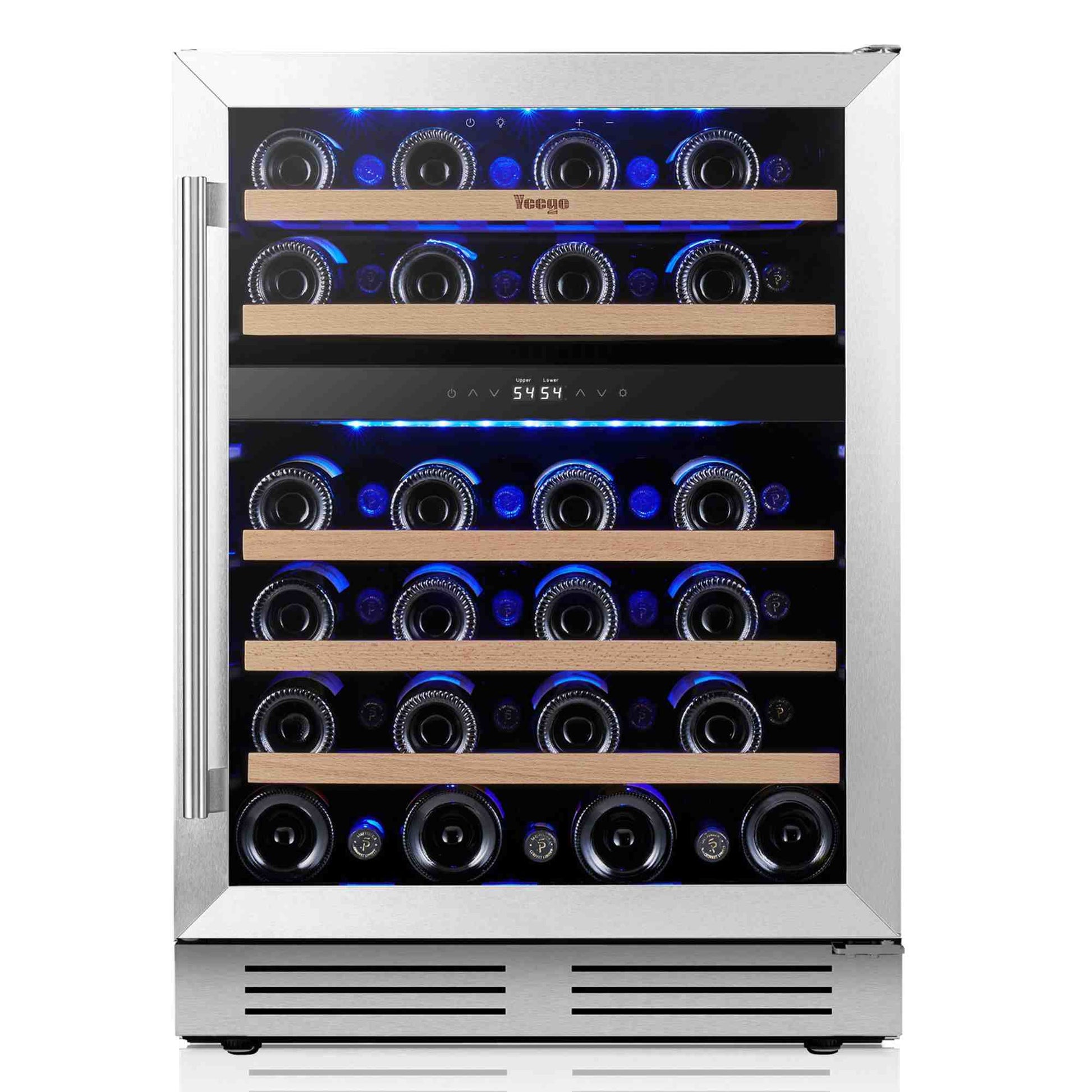
Yeego 24"Dual Zone Wine Fridge
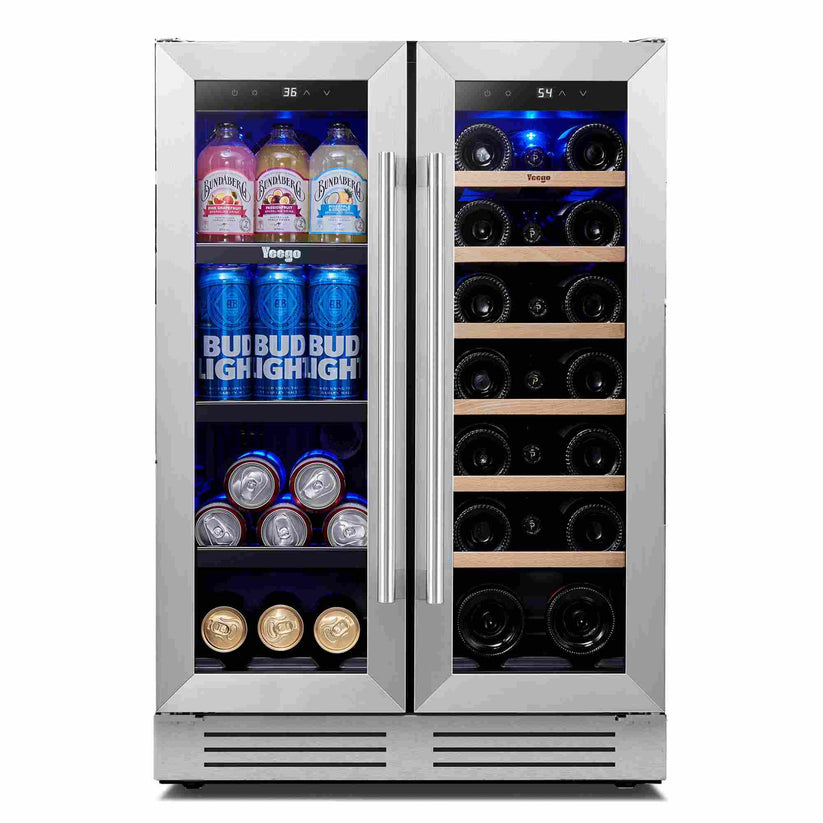
Yeego Wine Beverage Fridge
A Few Quick Answers
1. How long can wine stay in a regular refrigerator?
An unopened bottle can stay in a regular refrigerator for a short period without immediate issues. Long-term storage is a different story. Constant low temperatures and dry conditions may affect the cork over time, which can impact the wine's flavor and aging potential.
If the bottle has already been opened, storage time depends on the wine style, sealing method, and refrigeration conditions. For a detailed breakdown, see How Long Does Opened Wine Last? Signs of Spoilage & Storage Tips.
2. What's the biggest mistake people make when storing wine at home?
One of the most common mistakes is storing wine in areas with frequent temperature swings, such as above a refrigerator, near an oven, or next to a sunny window. Consistent temperature is often more important than trying to hit a perfect number.
3. Can sparkling wine be stored in a wine fridge?
Yes. Most sparkling wines store well in a wine fridge. Many wine enthusiasts prefer keeping sparkling wine at a slightly cooler temperature than red wine, making a dual-zone wine fridge especially convenient when storing different wine styles together.
4. What happens if wine is stored upright for years?
For cork-sealed wines, storing bottles upright for extended periods may allow the cork to dry out. A dry cork can shrink and allow unwanted air into the bottle, potentially affecting the wine's quality over time. Understanding Why Are Corks So Important for Wine Storage? can help explain why bottle position remains an important part of long-term wine preservation.