
Backyard BBQ Drinks: How to Create a Better Patio Drink Setup
Key Takeaways
- Good BBQ drink planning covers more than where drinks are served. It brings kitchen prep, indoor storage, restocking, and outdoor service together.
- Keep the main refrigerator available for food. Bottled and canned drinks are often easier to organize in a separate beverage fridge.
- Depending on your home’s layout, an indoor drink station near the patio door can make trips between the kitchen and backyard easier.
- The patio does not need to hold the entire drink supply. Bring drinks outside in smaller batches and restock as needed to keep them cold and the serving area organized.
Introduction
A backyard BBQ feels casual, but the drink setup can quickly disrupt the flow between the kitchen and patio. Keep every beverage in the main fridge, and guests may spend the afternoon walking in and out of the food-prep area. Move the entire supply outside, and you may end up with warm drinks, melting ice, crowded tables, and frequent restocking trips.
A better approach is to create a simple kitchen-to-patio path. Keep the main drink supply chilled indoors, set up an easy-to-reach restocking point near the backyard entrance, and bring out only what guests are likely to enjoy soon.

Map Your Kitchen-to-Patio Hosting Flow First
Before buying ice buckets, bar carts, or another fridge, think about how people will move through your home. A good drink setup shouldn’t interfere with cooking, grilling, or the main path guests use to reach the backyard.
Start by identifying three zones: the kitchen prep area, the indoor-to-outdoor transition area, and the patio serving area.
Kitchen Prep Zone: Keep the Kitchen Focused on Food
On BBQ day, the kitchen’s main job is food prep. Meat may need time to marinate, side dishes need to stay chilled, and finished food needs a clear path outside.
You can chill drinks indoors before the gathering, but once guests arrive, the kitchen shouldn’t double as the main drink station. Otherwise, you may find yourself working around guests gathered in front of the fridge while trying to carry food outside.
Reserve the main fridge for perishable ingredients, prepared dishes, and leftovers that need safe cold storage. The FDA recommends keeping refrigerators at or below 40°F (4°C), which is especially important when raw ingredients, prepared sides, and leftovers are being stored before or after a BBQ.
Water, sparkling water, soda, beer, and other bottled or canned drinks are often easier to manage in a separate beverage fridge. For longer-term wine storage, consider a wine fridge or the dedicated wine section of a wine-and-beverage cooler instead of relying on a standard food refrigerator.
Transition and Service Zone: Connect the Kitchen with the Backyard
Most homes have a natural transition area between the kitchen and backyard, even without a full home bar. Possible locations include:
- The outer side of a kitchen island
- A dining room sideboard or breakfast nook
- A pantry or home bar near the back door
- A wall just inside the patio door
This area gives guests a place to grab a drink without walking into the main cooking zone. Keep it close to the path outside, but make sure it doesn’t narrow the walkway.
Placing the station directly in front of the patio door may create more congestion than it prevents. A spot just to the side of the doorway is usually easier to see and use while keeping the entrance clear.
Patio Serving Zone: Support Immediate Self-Service
The patio doesn’t need to hold the entire drink supply, only what guests are likely to reach for soon.
A small cooler, beverage tub, or serving tray can hold the current selection while the rest stays chilled indoors. This keeps drinks out of the heat for less time and leaves more table space for food, plates, and guests.
Watch the Routes Guests Will Actually Use
Before the gathering, walk through the route guests will use to reach the backyard. Notice where they’ll stop for drinks and whether your restocking path crosses the grill, dining table, or main seating area.
A well-planned setup should reduce traffic between three main routes:
- Your food-prep and serving route
- The guests’ self-service drink route
- The restocking route from indoor refrigeration to the patio
These routes don’t need to be completely separate, but they shouldn’t keep crossing at the busiest point in the home.
Plan Drinks Around the Gathering, Not Just the Guest Count
BBQ drink planning is often reduced to one question: How many drinks should you buy for each guest? Guest count matters, but it doesn’t determine your chilled storage needs, first-round serving size, or restocking schedule on its own.
Two gatherings with the same number of guests may need very different plans depending on the event length, weather, menu, and guest mix.
Consider Five Variables First
- Number of Guests. A family dinner for four to six people may need only a simple drink selection and one round of restocking. Larger gatherings usually benefit from clearer beverage categories and more chilled backup drinks.
- Length of the Gathering. A two-hour BBQ lunch has different needs than a pool party that lasts all afternoon. For longer events, separate the first round from the backup supply and keep extra drinks chilled until they’re needed.
- Weather and Outdoor Conditions. Heat and direct sunlight can quickly warm drinks left outside. On hot days, keep water and nonalcoholic options visible and restock them first.
- The BBQ Menu. Smoky, spicy, or salty foods may increase demand for water, sparkling water, and lighter refreshments. Let the menu guide your drink selection without turning a casual BBQ into a complicated pairing project.
- Guest Mix. A thoughtful drink setup should include options for children, nondrinkers, designated drivers, and guests who prefer lower-sugar choices. Also consider how long everyone will be outdoors, since longer gatherings may increase demand for water and other refreshing drinks.
Organize Drinks by Function
Organizing drinks by purpose is usually more practical than sorting them by brand or packaging.
| Drink Category | Examples | Best Placement | Restocking Priority |
|---|---|---|---|
| Hydration | Water, sparkling water, and other refreshing drinks | Keep visible and easy to access at the drink station | Highest priority, especially during hot-weather gatherings |
| Everyday Favorites | Soda, lemonade, canned tea, juice, and family-friendly drinks | Patio serving area or indoor beverage station | Replenish based on guest preferences |
| Adult Beverages | Beer, wine, and other alcoholic beverages | Separate section based on the meal and serving style | Bring out according to actual consumption |
| Backup Stock | Additional unopened beverages kept ready for later use | Indoor beverage fridge or wine-and-beverage cooler | Refill when the first serving begins to run low |
This setup also makes the outdoor station easier to understand. Guests can quickly find what they want without searching through a mixed cooler or heading back into the kitchen.
Create a Two-Level Drink System
The three zones explain how your home supports the gathering. The two-level system shows how drinks move from indoor storage to outdoor self-service.
Most homes don’t need a remodel to make this work. Simply separating indoor storage from outdoor service can make the entire setup easier to manage.
Level One: Indoor Refrigeration and Restocking
When the layout allows, an indoor spot near the patio door can serve as the main drink storage and restocking point.
Guests can grab water or a canned drink without walking to the main fridge, while you can refill the outdoor cooler without carrying supplies from the main kitchen area.

A practical setup may include:
- A beverage fridge or wine-and-beverage cooler
- Pre-chilled water, sparkling water, and everyday cold drinks
- Beer or canned drinks guests often request
- Glassware, napkins, and bottle openers
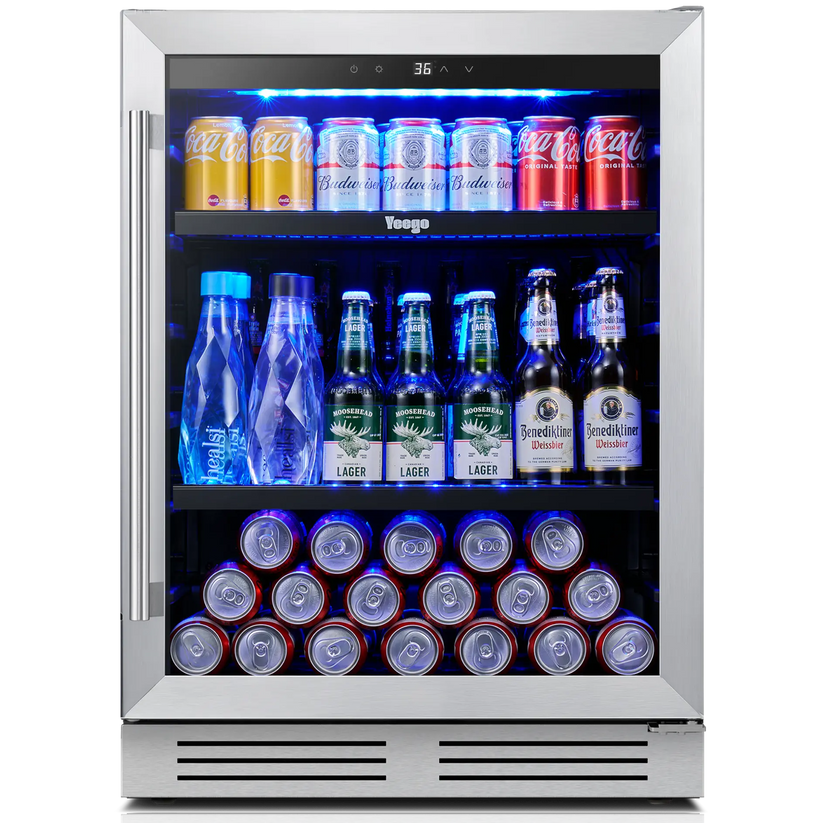
Yeego 24" Beverage Cooler
“Near the patio door” doesn’t mean placing the appliance directly against the door frame. You still need to consider ventilation, door clearance, electrical access, and normal household traffic.
The beverage area should sit along the route to the backyard without blocking the doorway, crowding dining chairs, or interfering with the kitchen’s food-serving path.
Why Keep a Standard Beverage Fridge Indoors?
Indoor conditions provide more consistent protection from heat, rain, and moisture. They’re also more likely to meet the electrical and installation requirements of a standard indoor appliance.
The same station can support everyday beverage storage, family dinners, game nights, and holiday gatherings, making it useful throughout the year, not just during summer BBQs.
Don’t place a standard indoor beverage fridge outside unless the manufacturer specifically rates the model for outdoor use.
Level Two: The Patio’s Immediate-Service Area
The patio only needs to hold what guests are likely to enjoy within a relatively short time.
At the beginning of the gathering, the first round may include:
- Water and sparkling water
- Popular nonalcoholic drinks
- A limited amount of beer or canned drinks
- Wine planned for the meal
- Glassware and bottle-opening tools
If the patio station also includes salads, dips, dairy-based sides, or other perishable foods, keep them in a separate insulated cooler with enough ice or cold packs to maintain a safe temperature. USDA grilling and food safety guidance recommends keeping cold food at 40°F or below.

Keep the rest of the drink supply chilled indoors. When the first round starts to run low, restock based on what guests are actually drinking.
Bringing drinks out in stages helps prevent them from warming in the sun, keeps tables and ice buckets from becoming overcrowded, and reduces the amount of unused supply that needs to be carried back inside.
Where Should the Patio Drink Station Go?
A good location should meet three basic conditions:
- Guests can see and reach it easily.
- It stays away from the grill and other heat sources.
- It doesn’t block the patio door or another main walkway.
Keep the station away from the grill, where heat and foot traffic may interfere with cooking. If there’s a pool, keep glass bottles and stemware away from the water’s edge. A shaded corner of the patio or a spot between the seating area and indoor entrance is usually a practical choice.
A Self-Service Area Needs More Than an Ice Bucket
Guests should be able to grab a drink, pick up a cup, open or pour it, and dispose of the empty container without returning to the kitchen.
Along with drinks and ice, provide bottle openers, napkins, a recycling bin, and a few basic cleanup supplies. These small details help the station stay organized and useful throughout the gathering.
Chill, Stage, and Restock in Rounds
A good setup isn’t only about where drinks are stored. It also considers when they’re moved outside.
A simple routine works well:
- Chill the main supply before the gathering.
- Bring out only the first round shortly before guests arrive.
- Restock based on what people are actually drinking.
- Reduce the amount outside as the gathering winds down.
This approach can reduce ice use and make it easier to keep track of what’s left.
Three Backyard BBQ Drink Systems to Adapt at Home
Different gatherings call for different setups. Adjust yours based on the number of guests, the distance from the kitchen to the patio, and how people will move through the space.
Small Family BBQ
Best for: A casual dinner or weekend cookout for four to six people.
A gathering this size usually doesn’t need a large outdoor drink station. Keep the main supply chilled indoors and use a small cooler, ice bucket, or drink tray on the patio.
A simple selection and one round of restocking are often enough. The goal is easy access, not putting out more drinks than the group is likely to enjoy.

Weekend Gathering with Friends
Best for: Guests moving between the living room, dining area, and patio.
Set up the main storage and restocking point near the patio door, along with an easy-to-spot self-service table outside. Keep water, nonalcoholic drinks, and alcoholic options in separate areas so guests can quickly find what they want.
Place a recycling bin nearby to prevent empty cans and bottles from collecting on the serving table.
Large Backyard or Pool Party
Best for: Longer events with guests spread across the pool, dining table, lawn, and lounge areas.
Keep the main chilled supply indoors and use a covered cooler, beverage tub, or mobile cart for outdoor service. In a larger yard, plan the restocking route ahead of time so you don’t have to carry drinks repeatedly through crowded seating areas.
Make water and popular nonalcoholic options easy to find. Keep glass containers away from the pool, and bring out additional drinks in stages instead of placing the entire supply outside at the beginning.
How to Choose Between a Beverage Fridge and a Wine-and-Beverage Cooler
Once you know how much chilled storage your household needs and where the indoor restocking point will go, you can choose refrigeration that matches your usual drink mix.
Capacity matters, but shelf layout, bottle height, and temperature zones are also important.
A Beverage Fridge May Be the Better Choice When
A beverage fridge is generally the more practical choice for households that mainly store water, sparkling water, soda, beer, and canned drinks.
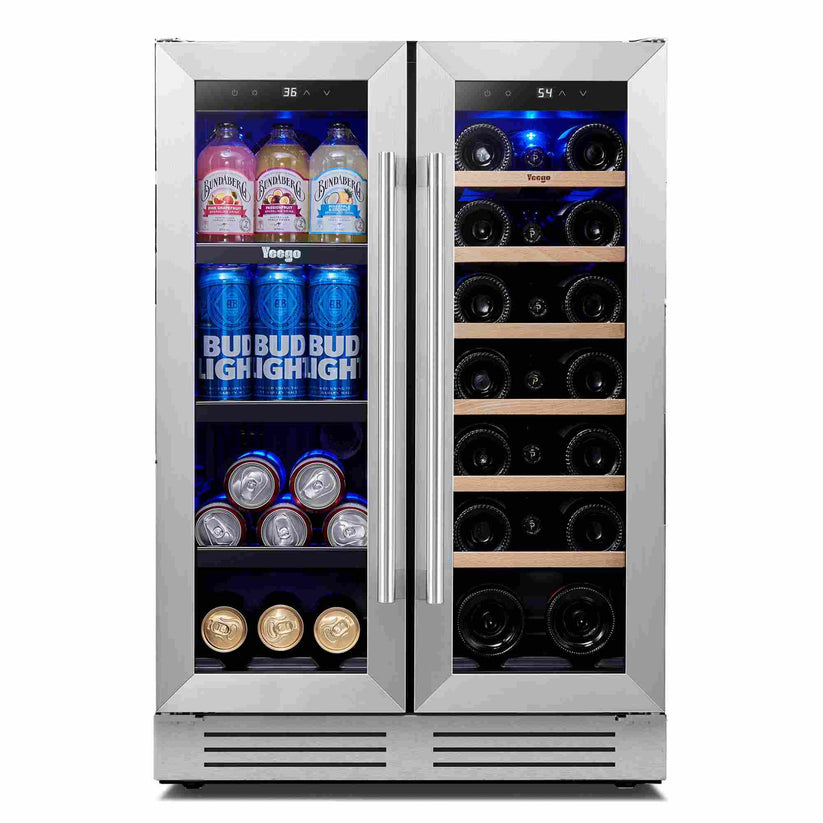
Yeego Wine Beverage Fridge
It may be a better fit if you:
- Regularly keep a large supply of bottled or canned drinks
- Want to reserve the main fridge for food
- Frequently host BBQs, pool parties, or game-day gatherings
- Don’t need dedicated wine storage
- Prioritize capacity, organization, and easy access
Advertised capacity is usually based on a specific loading arrangement, so using a mix of bottle and can sizes may reduce the amount you can store.
| Consideration | Beverage Fridge | Wine-and-Beverage Cooler |
|---|---|---|
| Best For | Water, soda, sparkling drinks, beer, and canned beverages | Wine combined with everyday cold beverages |
| Main Priority | Maximum beverage capacity, organization, and quick access | Separate storage areas for wine bottles and regular drinks |
| Storage Layout | Shelves designed mainly for bottles, cans, and everyday beverages | Dedicated sections for wine bottles and beverage storage |
| Ideal Hosting Scenario | BBQs, pool parties, game days, and frequent cold drink storage | BBQ dinners, home bars, dining spaces, and mixed beverage entertaining |
| Best Fit | Households that mainly need beverage organization | Households that regularly serve both wine and cold drinks |
A Wine-and-Beverage Cooler May Be the Better Choice When
A wine and beverage cooler may make more sense when wine is regularly served alongside everyday cold drinks and you need separate storage areas for bottles and cans.
It may be a better fit if you:
- Regularly serve wine with BBQ meals
- Want separate storage for wine bottles and canned drinks
- Plan to place the appliance in a dining area, home bar, or entertainment room
- Have limited space for multiple fridges
- Value organized storage more than maximum can capacity
If you regularly store wine, consider dedicated wine refrigeration or a dual-purpose model with a separate wine section instead of relying on a standard food refrigerator for long-term storage.
What Should You Confirm Before Buying?
Before choosing a model, check:
- The available width, depth, and height
- Whether the appliance supports freestanding or built-in installation
- Ventilation and clearance requirements
- Door swing and surrounding space
- Electrical access
- Shelf layout and compatibility with the bottles and cans you normally store
- Exposure to direct sunlight or nearby heat sources
For a kitchen-to-patio setup, the appliance should be easy to reach without interfering with normal household traffic or everyday kitchen use.
Conclusion
A smooth backyard BBQ doesn’t need a large drink display on the patio. It simply needs the right drinks to be available in the right place at the right time.
The main fridge can stay focused on food, everyday bottled and canned drinks can be chilled in a beverage fridge, and wine can be kept in suitable wine storage. The indoor station holds most of the supply, while the patio provides what guests are likely to enjoy next.
When indoor storage and outdoor service each have a clear role, restocking becomes easier and guests can help themselves without repeatedly returning to the kitchen. For households that regularly host BBQs, patio dinners, pool parties, or game-day gatherings, a dedicated beverage fridge can make the kitchen-to-patio setup more organized and easier to manage.
Frequently Asked Questions
1. What drinks should always be available at a summer BBQ?
A balanced BBQ drink selection may include water, sparkling water, soda, lemonade, beer, wine, and other nonalcoholic options. The right mix depends on your guests, the weather, and the menu.
Hydration should usually come first, especially during outdoor gatherings in warm weather. Offering a few different choices helps guests find something they enjoy without making the drink station overly complicated.
2. Is a beverage fridge worth it for a family that hosts often?
For households that frequently host BBQs, game nights, pool parties, or weekend gatherings, a beverage fridge may offer more than extra storage.
Its main benefit is reducing competition between food and drinks in the main fridge while giving everyday beverages a dedicated place of their own. It can also be useful between gatherings for storing water, sparkling drinks, and family favorites.
Its value depends less on occasional entertaining and more on whether your household regularly needs a separate beverage storage system.
3. Can I store unopened drinks in a beverage fridge?
Yes. Beverage fridges are commonly used to organize and chill unopened bottled water, soda, sparkling drinks, beer, canned tea, and other packaged beverages.
Chilling drinks before a gathering can simplify preparation and reduce the amount of ice needed for outdoor serving.
4. Should wine be stored separately from beer and soda?
In many households, separate storage can make organization easier because wine bottles and everyday beverages have different shapes, storage needs, and serving preferences.
A wine-and-beverage cooler may be useful for homes that regularly serve both wine and cold drinks during meals, BBQs, or other gatherings.
5. What wine is good for a backyard BBQ?
The best wine depends on the food, seasoning, and your guests’ preferences.
Grilled meats often work well with fuller-bodied reds, while lighter dishes may pair well with white or sparkling wine. For a casual gathering, offering a few flexible options is usually more practical than planning several specific pairings.