
Oktoberfest Beer Temperature: How Cold Should It Be?
Key Takeaways
- Temperature affects aroma release and how you experience carbonation, malt character, and mouthfeel.
- Beers labeled Oktoberfest can represent different styles, so check the individual beer before choosing a serving temperature.
- Temperature charts are useful starting points. A brewery’s recommendation for its own beer is more specific.
- Cold storage helps preserve beer over time, while serving temperature affects how it tastes and feels in the glass.
- Your fridge display, the outside of a bottle or can, and the beer itself may not all be at exactly the same temperature.
- A few small tastes as the beer warms can help you find the serving point you enjoy most.

The first sip of a fall beer straight from the fridge can be all chill and carbonation. A few sips later, you may start to notice bread crust, toasted grain, or a hint of floral hops. The beer might even feel a little rounder on your palate. So what changed?
Oktoberfest season is a good time to pay attention. Märzen and Festbier, both familiar fall styles, have plenty of malt character to explore. For a little background on why Oktoberfest begins in September, the festival’s official FAQ explains the timing. September 28 is also commonly marked as National Drink Beer Day. Choosing a beer you enjoy is only part of the experience. How you serve it matters, too.
A good serving temperature balances refreshment, aroma, and mouthfeel. The beer itself, the brewery’s guidance, and your own preferences are better starting points than simply making it as cold as possible. A little warming can bring more character forward, but warmer isn’t always better.
What does temperature actually change in beer?
Aroma: why malt can be harder to notice when beer is too cold
Much of what you experience as flavor depends on aroma. What you smell before a sip, along with the aromas you notice while drinking, shapes the overall experience.
When beer is very cold, some aromas can be harder to notice. A freshly poured beer may seem muted at first, then reveal more grain, bread, toast, or floral character as it warms slightly. The American Homebrewers Association also identifies reduced aroma and flavor perception as one of the effects of serving beer too cold.
That helps explain why a beer can seem quiet on the first sip and more expressive a few minutes later. You’re not tasting new flavors. You’re simply picking up on ones that were already there.
This can be especially noticeable with Festbier and Märzen, where malt character is an important part of the experience. When the beer is extremely cold, you may notice the chill and carbonation before the doughy, bready, or toasted notes.
Carbonation: foam only tells part of the story
Inside a sealed bottle or can, carbon dioxide is dissolved in the beer under pressure. Once you open and pour it, some of that gas begins to escape. As the beer warms, carbon dioxide also becomes less soluble, so carbonation can gradually feel different in the glass.
The foam on top, the bubbles rising through the beer, and the prickling sensation on your tongue are related, but they aren’t exactly the same thing. Glass cleanliness, pouring technique, and the beer itself can all affect the foam, so the height of the head alone doesn’t tell you how much carbonation remains.
If a beer feels softer later in the glass, several things may be changing at once: carbonation, aroma, and temperature. What feels “refreshing” is usually a combination of those sensations rather than temperature alone.
Flavor balance: more malt character doesn’t necessarily mean more sweetness
A few terms can help separate what you’re experiencing:
- Malt aroma: Notes such as dough, bread crust, and toasted grain.
- Sweetness: The sweet taste you perceive on your palate.
- Body: How light, rounded, or full the beer feels in your mouth.
- Finish and aftertaste: What remains after you swallow and how long those flavors linger.
A Märzen can have noticeable bread-crust and toasted-malt aromas while still finishing relatively dry. A stronger malt aroma doesn’t automatically mean the beer tastes sweeter.
As the temperature changes, malt, bitterness, carbonation, and alcohol can become more or less noticeable relative to one another. If the beer begins to feel rounder, ask yourself what changed. Is the malt clearer? Does the carbonation feel softer? Or are you noticing both?
If further warming starts to make the beer feel heavy or brings the alcohol forward more than you enjoy, you’ve probably passed your preferred point.
From Festbier to Märzen: know what to look for
Festbier: expressive malt with a crisp finish
Festbier is typically golden, with doughy or lightly toasted malt character and restrained floral, herbal, or spicy hop notes. It can have noticeable malt richness while still feeling crisp and easy to drink.
Pay attention to both the malt and the finish. Can you pick out the bready aroma while the beer still feels refreshing after a sip?
Serving it extremely cold may make those aromas harder to notice, while letting it warm too far may take away some of the crispness you enjoy.
Märzen: bread crust and toasted malt
Märzen typically ranges from amber to copper, with malt character that can suggest bread, bread crust, and toasted grain. Its malt expression is generally richer than Festbier’s, but that doesn’t mean it has to taste sugary or heavy.
Smell the beer, then take a small sip. Do the toasted notes carry from the aroma into the flavor? Does enough bitterness remain to balance the malt through the finish?
Those details tell you more about the beer than simply asking whether it tastes sweet.
Look beyond the Oktoberfest label
Not every beer labeled “Oktoberfest” tastes the same. In the United States, you’ll find Märzen-style Oktoberfest beers, Festbiers, and other brewery interpretations of the seasonal tradition.
Check the style name, tasting notes, and brewery description when they’re available. Color and alcohol content can offer clues, but neither determines the ideal serving temperature on its own.
A golden beer can still have plenty of malt character, and an amber beer doesn’t automatically need to be served much warmer.
What temperature should you serve Oktoberfest beer?
Start with the brewery’s recommendation
Serving-temperature charts can be useful, but they don’t all describe the same thing. A brewery may recommend a temperature for one specific beer, while a style guide gives a broader range for an entire category.
| Reference | Suggested Drinking Temperature | What the Guidance Applies To |
|---|---|---|
| Weihenstephaner Festbier |
About 43–46°F 6–8°C |
The brewery’s recommendation for this specific beer. |
| German-style Märzen / Oktoberfest |
45–50°F About 7–10°C |
A style-level range in CraftBeer.com’s Beer Styles Study Guide. |
Weihenstephaner lists a drinking temperature of 6–8°C for its Festbier. CraftBeer.com’s Beer Styles Study Guide gives German-style Märzen/Oktoberfest a serving range of 45–50°F.
The ranges overlap, and they don’t create a fixed temperature boundary between every Festbier and Märzen. One recommendation applies to a specific beer, while the other is a general style reference. If the brewery gives serving guidance for the beer in your glass, that’s a good place to start.
Find your preferred point within the range
Try the beer toward the cooler end of its recommended range and pay attention to the aroma, carbonation, malt, and finish. Then notice what happens as it warms naturally in the glass.
If the aroma seems faint at first, smell it again after a few sips. You may reach a point where the bread or toasted notes are clearer while the beer still feels crisp and lively. That might be the balance you prefer.
If further warming makes the beer feel less refreshing or brings the alcohol forward more than you like, there’s no need to keep waiting.
Enjoying your beer colder doesn’t mean you’re doing it wrong. Temperature guidance gives you a useful starting point. Your preferences determine where you want to stop.
Why “leave it out for five minutes” isn’t a reliable rule
Five minutes doesn’t mean the same thing in every situation.
A bottle sitting in a cool kitchen will warm differently from one left outside in direct sunlight. Starting temperature, room temperature, pour size, glass temperature, and even how long you hold the glass can affect how quickly the beer warms.
Waiting a few minutes can be a useful reminder to taste again, but it can’t guarantee that the beer has reached a specific temperature.
If you want to compare temperatures more precisely, measure a small sample and connect the number with what you smell and taste.
Cold storage and serving temperature have different jobs
Cold storage helps preserve flavor over time
A beer that tastes better after warming slightly in your glass doesn’t necessarily benefit from having the entire case stored warm.
Storage is about preserving the beer over days, weeks, or longer. Warmer storage conditions can speed up flavor changes and deterioration, while refrigeration generally helps slow those changes.
Follow the brewery’s storage instructions when available, and check the packaging or best-by date when deciding how long to keep the beer.
Refrigeration can help preserve the beer’s current condition, but it can’t reverse flavor changes that have already happened.
Adjust the portion you’re about to drink
Keep the rest of your beer stored according to the brewery’s guidance, then adjust the serving conditions for the portion you’re ready to enjoy.
Two beers from the same fridge don’t necessarily have to be enjoyed at exactly the same temperature. You might prefer one immediately after pouring while letting another warm slightly so its malt character becomes easier to notice.
That’s why a serving-temperature chart shouldn’t automatically become the storage setting for everything in your fridge. Storage and serving temperature are related, but they have different jobs.
If the fridge reads 43°F, is the beer also at 43°F?
Not necessarily.
Depending on the appliance, the display may show the selected setting or a reading from a temperature sensor inside the cabinet. It doesn’t directly tell you the exact temperature at the center of every bottle or can.
Beer added at room temperature also needs time to chill. Even if the air inside the fridge is near the target temperature, the liquid may still be warmer. Once you pour it, the glass, room temperature, and warmth from your hand continue to affect it.
A cold bottle or can gives you a useful clue, but surface temperature isn’t the same as measuring the liquid itself. If you want a closer comparison, check a small sample with a clean thermometer suitable for liquids.

For everyday drinking, though, you don’t need to measure every pour. Getting familiar with how your favorite beers taste at different points is usually more practical.
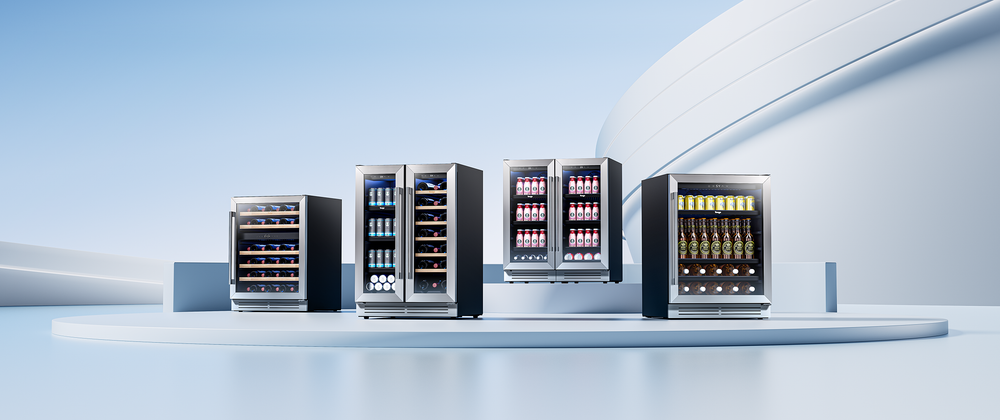
A dedicated beverage fridge can make this routine easier if you regularly keep beer, sparkling water, and other drinks cold. It gives everyday beverages their own organized space without crowding the main refrigerator.
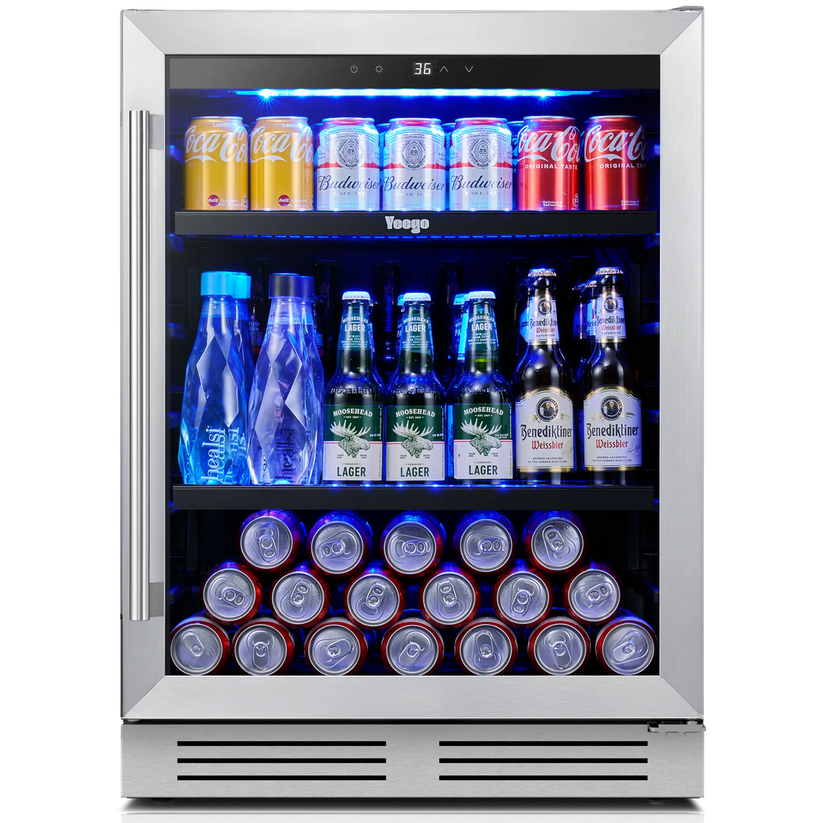
Yeego 24" Beverage Cooler
Before choosing a size, it also helps to understand how bottles and tall cans affect fridge capacity. The advertised can count may not reflect the mix of cans and bottles you actually keep at home.
When comparing Yeego beverage fridges, look at each model’s adjustable temperature range, shelf layout, capacity, and operating instructions alongside the drinks you normally keep.
Use one beer to find the temperature you enjoy
Start with a clean glass
Choose a properly stored beer with a clearly identified style. Pour a small amount into a clean, odor-free glass, smell it, and then take a sip.
For this kind of comparison, room-temperature or slightly chilled glassware works well. A frosted glass adds another variable because it changes the beer’s starting temperature and can also affect foaming.
The Brewers Association recommends room-temperature or slightly chilled glassware depending on the beer style and advises against frosted glassware.
Notice your first impressions. How noticeable is the aroma? How lively does the carbonation feel? What flavors remain after you swallow?
You don’t need formal tasting vocabulary. Simple notes such as “bready,” “crisp,” “fizzy,” or “a little heavy” are enough.

Revisit three questions as it warms
Aroma: what can you smell now?
Are grain, bread, toast, or floral notes easier to recognize? Even if you can’t name a specific aroma, you can still notice whether the beer seems more expressive than it did at first.
Mouthfeel: how do carbonation and malt fit together?
Does the carbonation still feel lively? Is the malt easier to notice? Do you prefer the balance now or when the beer was first poured?
Finish: what lingers after a sip?
Is the aftertaste enjoyable? Has the beer started to feel heavier, less crisp, or more alcoholic than before?
Remember that the same glass is changing in more than one way. It’s warming, but it’s also been open longer and releasing carbonation. This is a useful everyday tasting method, but not every change can be attributed to temperature alone.
Remember why you liked it
A note such as “Around 45°F, the bread aroma was clearer and the beer still felt crisp” is more useful than deciding the beer must always be served at exactly 45°F.
It connects a temperature with the experience you enjoyed while still allowing for differences in glassware, room temperature, and drinking pace.
When you try a new beer, start again with the brewery’s guidance and the beer’s style. Two bottles labeled Oktoberfest may still taste best to you at slightly different points.
Find the balance in your glass
Festbier’s golden color and crisp finish, along with Märzen’s bread-crust and toasted-malt character, give you plenty to notice beyond the initial chill.
This Oktoberfest season, pay attention past the first sip. Notice when the aroma becomes clearer, when the carbonation and malt feel most balanced, and when you simply enjoy the beer most.
You don’t need to chase one exact number every time. Remember the conditions that made the beer taste good to you, and the next pour becomes much easier to repeat.
Frequently Asked Questions
1. Is Oktoberfest beer always stronger than regular beer?
No. “Oktoberfest” does not determine one fixed alcohol level. Many beers served at the Munich festival are around 6% ABV, while Oktoberfest seasonals sold in the U.S. vary by brewery and recipe. Color, malt aroma, and the word “fest” cannot replace the ABV statement, so check the package when comparing alcohol strength.
2. Does sediment at the bottom of a beer bottle mean the beer has gone bad?
Sediment alone does not establish spoilage. Bottle-conditioned or unfiltered beer may contain normal yeast sediment, and some producers let the drinker decide whether to include it in the pour. Check the label for terms such as “bottle conditioned,” “unfiltered,” or “naturally carbonated,” then follow the brewery’s pouring guidance. Do not consume a product with a swollen package, damaged seal, or appearance and aroma that clearly differ from the producer’s normal beer.
3. What do IBU and ABV mean, and does a higher IBU mean more alcohol?
No. ABV expresses alcohol as a percentage of volume, while IBU measures compounds associated with hop bitterness. There is no fixed conversion between the two, so a high-IBU beer may have either a lower or higher ABV. Perceived bitterness is also shaped by malt sweetness, body, and carbonation, which means IBU alone cannot describe how bitter the beer will taste.
4. Does Oktoberfest beer usually contain pumpkin or pumpkin spice?
Traditional Festbier and Märzen are not defined by pumpkin, cinnamon, or nutmeg. Paulaner Oktoberfest Bier, for example, lists water, malted barley, and hops. Creative fall releases may use different recipes, however, so the word “Oktoberfest” is not a complete ingredient statement. Check the product label and contact the brewery if an ingredient matters for dietary or allergy reasons.
5. Why can refrigerated beer still smell skunky?
Cold storage does not prevent every flavor fault. The characteristic skunky odor results from a light-driven reaction involving hop compounds, so a beer can remain cold and still be affected by light before refrigeration, during transport, or on display. If the odor is distinctly skunky, consider possible light exposure rather than judging storage by temperature alone.