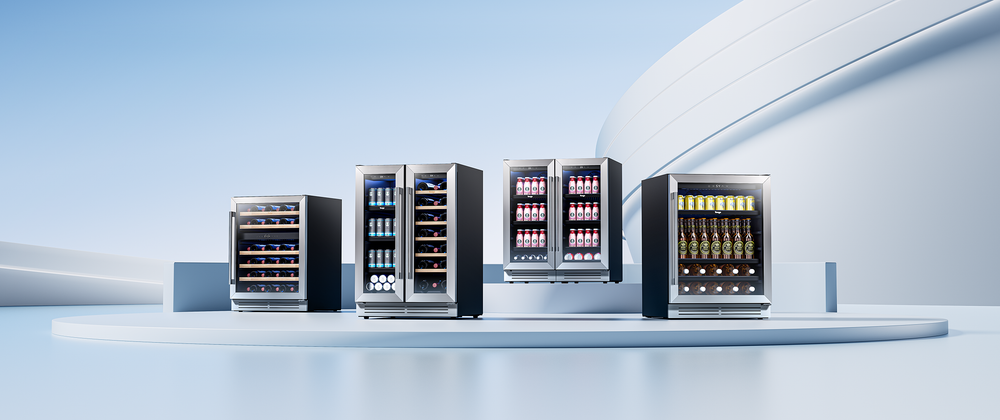

What Size Beverage Fridge Do You Need? 100 vs. 180 Cans
Key Takeaways
- Base your beverage fridge capacity on your everyday cold inventory, not household size alone.
- Advertised can capacity is a useful reference, but real-world storage varies with bottle size, tall cans, shelf spacing, and mixed packaging.
- Restocking habits matter. If you buy in bulk or shop less often, you may need more cold-storage buffer.
- Not every drink you buy needs to stay refrigerated. Keeping backup cases elsewhere can reduce the capacity you need inside the fridge.
- Leave enough room for your normal inventory plus some flexibility for restocking instead of planning to keep the fridge packed to maximum capacity.
- Don’t size a permanent appliance around a few large gatherings each year. Temporary overflow can be handled separately.
- Once you have a capacity range in mind, compare appliance dimensions, shelf configuration, door clearance, and installation requirements to make sure the fridge fits your space and routine.
When shopping for a beverage fridge, numbers like 100, 150, and 180 cans are often the first specs people notice. They’re easy to compare, and picking the larger number can feel like the safer bet. In everyday use, though, capacity isn’t a simple calculation based on household size.
Two households can own beverage fridges with the same 180-can rating and have very different experiences. One may have plenty of room, while the other quickly gives up shelf space to bottled water, tall beer cans, and mixed drink formats. The issue isn’t necessarily that the stated capacity is inaccurate. It’s that rated capacity and real-world usable capacity are different.
What matters more is how many drinks you routinely want chilled, what packages they come in, and how often you restock.

First, Understand What “100 Cans” or “180 Cans” Actually Means
Can capacity is mainly a reference point for comparing beverage refrigerators. It is typically based on a specified can size, shelf arrangement, and loading pattern. A refrigerator rated for “180 cans” is therefore better understood as having a reference capacity under a particular configuration, not as a guarantee that every mix of drinks will fit the same way.
Once your drink mix changes, usable capacity changes with it. A shelf that holds neat rows of standard soda cans may need more vertical clearance for bottled water. Raising one shelf to accommodate taller bottles can reduce the usable space above it. Add tall beer cans, energy drinks, or glass bottles, and the layout changes again.
It helps to separate two ideas: Rated Capacity is the manufacturer’s reference figure for a particular loading arrangement, while Usable Capacity is the space you can realistically use with your own drinks, shelf setup, and routine. For everyday planning, usable capacity is usually the more useful number.
What You Store Matters More Than the Number on the Product Page
If most of what you keep cold comes in standard cans, such as soda, sparkling water, or canned beer, the advertised can count can be a useful comparison point. Container sizes are more consistent, the shelves need less adjustment, and the interior can be used closer to the manufacturer’s reference configuration. In that situation, the amount you store matters more than packaging variety.
Most households, however, keep more than one type of drink in the fridge. Soda, sparkling water, bottled water, beer, juice, and other beverages may all share the same space. When that happens, vertical clearance becomes just as important as the advertised capacity. Bottles need more height, and moving a shelf to accommodate them can reduce the usable space on another level.
For mixed storage, pay attention to how adjustable the shelves are, how much spacing flexibility they provide, and how the layout changes when a shelf is moved or removed.
The same applies if you regularly buy tall cans, slim cans, energy drinks, or larger-format craft beer. In those cases, maximum can count becomes less useful as a comparison. Internal flexibility matters more than how many standard cans fit under an ideal arrangement. That’s one reason two beverage fridges with similar advertised capacities can feel very different in everyday use.

The Better Number to Estimate Is Your Everyday Cold Inventory
A more useful question is: After a normal grocery run, how many drinks do you actually want cold at the same time?
That tells you more than household size alone. A family of four may buy only a modest amount of sparkling water and soda each week, while a two-person household may routinely stock several cases of beer, soda, and bottled water. The smaller household could still need the larger beverage fridge.
Capacity is better understood as a combination of daily consumption, restocking frequency, and drink variety. Household size affects those factors, but it doesn’t determine them.
If you shop once a week and only need enough cold storage for several days, a mid-size refrigerator may be plenty. If you routinely buy two or three weeks of beverages at Costco, Sam’s Club, or another warehouse store, you may keep considerably more drinks on hand even if your daily consumption is similar.
In many homes, the need for more capacity comes less from drinking more and more from restocking less often.
Not Every Drink You Own Needs to Be in the Fridge
One common mistake is treating the total number of beverages you buy as the amount of refrigerated space you need. Those numbers don’t have to match.
A more practical approach is to divide your drinks into two groups: Cold Inventory, or the drinks you expect to use soon and want ready to serve, and Backup Inventory, or unopened cases and shelf-stable drinks that don’t need to be chilled yet.
If you have a pantry, utility room, or another suitable storage area, backup cases of soda, bottled water, and other shelf-stable beverages can stay there until it’s time to restock the fridge. That way, your beverage fridge works as an active cold-storage zone instead of a warehouse for every drink in the house.
It also helps define the role of a dedicated beverage cooler within a broader beverage fridge vs. regular refrigerator setup. Frequently used drinks can stay in the beverage fridge, leaving the main refrigerator available for food and other items that need refrigeration.
In other words, size the fridge around what you want cold and accessible, not everything you happen to buy at once.

A Beverage Fridge Doesn’t Need to Be Packed to Be Useful
A refrigerator rated for 180 cans can create the impression that filling all 180 spaces is the best way to use it. In everyday life, though, keeping a beverage fridge packed to its maximum can make it harder to manage. A new case may have nowhere to go, adding a different drink may require rearranging several shelves, and inventory can become harder to track.
A better plan leaves some working buffer. That extra room isn’t wasted. It gives you space for normal restocking, changing drink formats, and adjusting shelves without reorganizing the entire fridge.
The real question isn’t whether you can fill every available inch. It’s whether your normal inventory fits comfortably with a little room to spare.
Don’t Size Your Everyday Fridge Around One Big Party
Occasional parties, game nights, and holiday gatherings can lead you to overestimate how much capacity you actually need. If you host 20 people a few times a year, for example, it can be tempting to buy a fridge large enough to handle the biggest event on your calendar.
The problem is simple: a beverage fridge takes up space every single day. If you normally need room for roughly 100 to 150 cans but choose a much larger appliance for a handful of gatherings, you’re using permanent floor or cabinet space to solve an occasional problem.
A better rule is: let your permanent appliance handle everyday demand, and let temporary solutions handle peak demand.
For larger gatherings, extra drinks can be chilled in stages or supported by the main refrigerator or a cooler. If occasional entertaining creates most of your peak demand, a well-planned summer drink station can also help manage overflow without making permanent fridge capacity do all the work.
When choosing capacity, your normal weekdays, weekends, and typical post-shopping inventory are better reference points than the largest gathering of the year.
100, 150, or 180+ Cans: Which Capacity Makes More Sense?
There is no strict household-size formula, but different capacity ranges can suit different inventory patterns. Use the ranges below as a practical planning guide rather than a fixed rule.
| Capacity Range | Best Fit | Main Advantage | What to Watch |
|---|---|---|---|
| Around 100 cans | Smaller inventories, frequent restocking, limited space | More compact and efficient for everyday use | Mixed bottles and tall cans can reduce usable capacity quickly |
| 120–150 cans | Mixed household drinks and moderate restocking cycles | Good balance between storage and appliance size | Shelf flexibility becomes more important |
| 180+ cans | Bulk purchasing, multiple drink categories, longer restocking cycles | More cold-storage buffer | Larger appliance footprint and potentially more unused space |
When Is Around 100 Cans Enough?
A roughly 100-can beverage fridge can work well if you keep only a few core drinks cold, restock fairly often, and have another place for backup cases. Choosing a smaller refrigerator isn’t necessarily a compromise in this situation. Inventory is easier to see, drinks tend to turn over faster, and less space is dedicated to items you rarely use.
When Does 150 Cans Offer a Better Balance?
If you regularly keep water, soda, sparkling water, and beer chilled at the same time, a mid-range capacity can provide more flexibility. It gives you room for several drink categories plus some restocking buffer without automatically requiring the footprint of a much larger appliance.
If you don’t have a clear need for bulk cold storage, this range can offer a practical balance between capacity and space.
When Does 180+ Cans Actually Make Sense?
Larger capacities make more sense when bulk buying, longer restocking intervals, multiple drink categories, shared use, or higher beverage consumption are part of your normal routine.
The key word is normal. Needing a lot of cold storage occasionally is different from needing it every week.
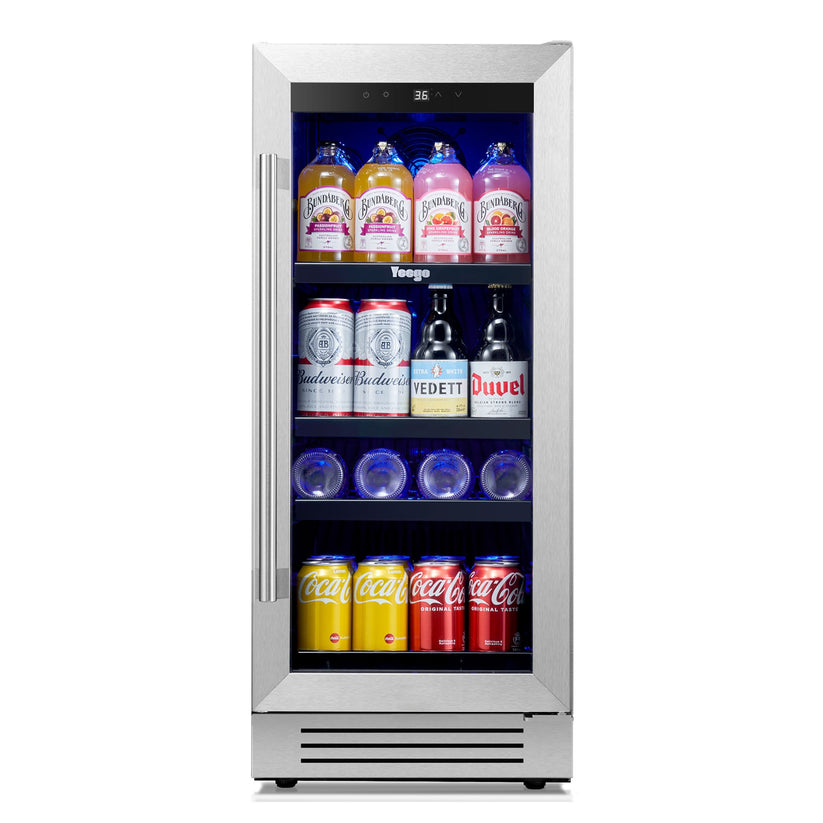
15" Beverage Cooler 100 Cans
Compact yet spacious beverage cooler with 100-can capacity, precise temperature control, and flexible placement for home, bar, or office spaces.
Capacity Still Has to Fit the Physical Space
You’re not really buying “180 cans.” You’re buying an appliance with a specific width, depth, height, door swing, and installation requirement. Capacity should never be considered on its own.
Two beverage refrigerators with similar advertised capacities may use their interiors differently because of shelf design, compressor housing, cabinet proportions, and overall layout.
Once you know roughly how much capacity you need, make sure that capacity works within the space you actually have. Installation requirements for built-in and freestanding beverage fridges can differ, so compare width, depth, height, door clearance, shelf configuration, and ventilation requirements before choosing a model.

This is especially important when comparing common 15-inch and 24-inch models. If the installation space is already fixed, the goal isn’t simply to find the highest can count. It’s to find a fridge that makes good use of the footprint you have.
In practical terms, the more useful measure is enough flexible storage within a cabinet size that actually works in your home.
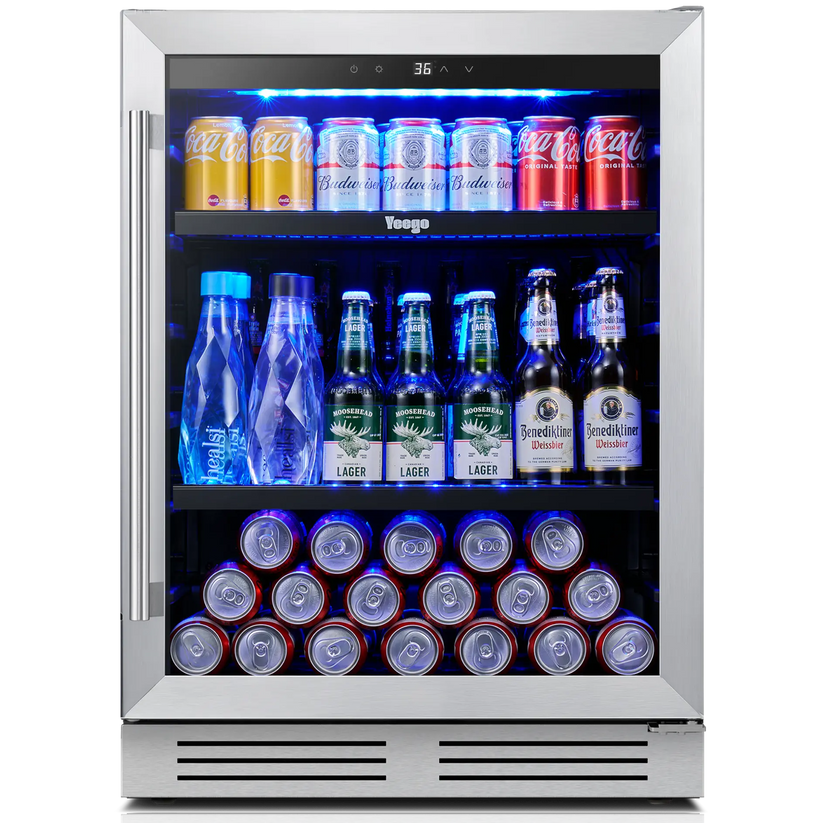
Yeego 24" Beverage Cooler
Final Takeaway: Compare Usable Capacity, Not Just Maximum Capacity
Can-count ratings are useful, but they’re only the starting point. The difference between a 100-can, 150-can, and 180-can beverage fridge isn’t simply how many extra cans fit inside. Real-world capacity also depends on container sizes, shelf layout, shopping habits, and how much cold inventory you normally keep on hand.
If you mostly store standard cans, rated capacity can be a useful guide. If you keep bottles, tall cans, and mixed formats, shelf flexibility deserves more attention.
And if you’re choosing between two capacity levels, use a simple rule: cover your normal cold inventory, leave some room for regular restocking, and don’t size the appliance around the biggest event of the year.
That usually leads to a beverage fridge that’s easier to live with day to day, without constant restocking or a lot of unused space.
Frequently Asked Questions
1. Can you store cans and bottles together in a beverage fridge?
Yes, as long as the shelf layout can accommodate different container heights. Adjustable or removable shelves are especially useful for mixed storage because bottles and tall cans need more vertical clearance than standard soda cans.
2. What temperature should a beverage fridge be set at?
There isn’t one ideal setting for every drink. Soda, sparkling water, beer, and other packaged beverages can have different serving preferences. For a mixed beverage fridge, choose a temperature that works for the drinks you store most often and make sure it falls within the appliance’s specified operating range.
3. Does a beverage fridge need space around it for ventilation?
Yes, but the required clearance depends on the model and whether it is intended for built-in or freestanding installation. Always follow the ventilation and clearance requirements provided for the specific refrigerator.
4. Can you store food in a beverage fridge?
A beverage fridge shouldn’t automatically be treated as a replacement for a standard food refrigerator. The FDA recommends keeping refrigerators used for perishable foods at 40°F (4°C) or below. Because beverage refrigerators vary in temperature range and intended use, perishable food should only be stored in one if the appliance can reliably maintain an appropriate food-safe temperature.
5. Why is condensation forming on the glass door of my beverage fridge?
Condensation can form when warm, humid air meets a colder glass surface. Room humidity, frequent door opening, the condition of the door seal, and temperature settings can all contribute. If condensation is persistent or excessive, check the installation and door seal and refer to the appliance instructions for troubleshooting guidance.