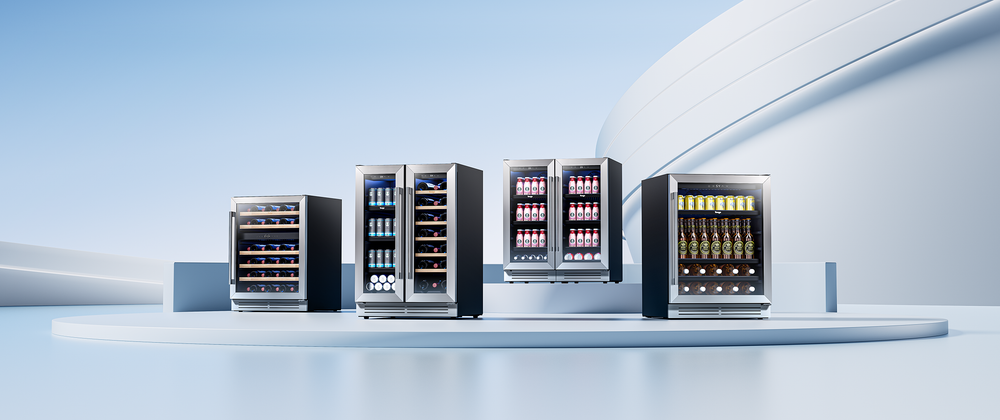

Selecting the Best Wine Fridge in 2026: Tailored Solutions for Every Enthusiast
Introduction
You might think it's normal to store wine in the kitchen refrigerator, but for wine, that's not the best place! This is why a wine fridge is essential for enthusiasts. The problem, however, is that most people still choose the wrong wine fridge.
Is it because they lack the budget? No.
Is it because they don't understand the technical specifications? No.
It's because they are focusing on the wrong things!
For users who are looking to buy, they compare factors like temperature control range, automatic defrosting, price, etc., but overlook the most important factor:
When choosing a wine fridge, you should decide based on your usage scenario, not just the specifications.

How to Choose the Right Wine Fridge for You?
Step 1 — Determine Your Storage Needs (Not Your Budget)
Before understanding any product, you need to clarify your actual wine storage needs.
Occasional Drinkers:
If you drink wine occasionally and need a wine storage device, your focus should be on:
- Small capacity
- Silent cooling
Typical use cases include family gatherings, live sports watching, etc.
Wine Enthusiasts:
If wine is a part of your life, your expectations will change as well:
- Larger storage space
- Independent temperature control for different zones
- Removable wine racks
This includes not only tasting but also collecting wines.
Professional Collectors:
At this level, basic storage needs are no longer enough. A more refined storage solution is required:
- Storage for over 100 bottles
- Drawers suitable for extra-large bottle sizes
- Dual independent temperature zones
- Inverter energy-efficient cooling
This applies to those who view wine as an investment.

Step 2 — Understand What Truly Matters
Rather than getting overwhelmed by various technical parameters, it's better to focus on their real-world significance.
① Do You Need a Large Capacity?
First, clarify your actual storage needs. Larger models are usually more expensive and occupy more space. You can choose the capacity as follows:
- Small Storage (12 to 40 bottles): Suitable for occasional drinkers or singles, usually for storing a few regular wines
- Medium Storage (50 to 100 bottles): Suitable for users who want to collect a certain amount of wine, such as for family gatherings or regular wine drinkers
- Large Storage (100+ bottles): Suitable for professional wine enthusiasts or those needing long-term storage of large quantities of wine, typically used in cellars or commercial settings
When selecting the capacity, it's recommended to leave extra space for future expansion. If you plan to store wine for the long term, opt for a larger fridge to avoid the hassle of needing to replace it later.
② Single Zone vs. Dual Zone Temperature Control
Independent temperature control is mainly suitable for users who need to store various types of wine.
Single Zone Temperature Control: Suitable for storing one type of wine, such as only red or white wine. It provides a stable temperature environment to maintain the wine at its optimal drinking state. For those who prefer a single wine type, a single zone is sufficient.
Dual Zone Temperature Control: If you store red, white, and champagne wines, a dual-zone fridge is a better choice. This design allows you to set two different temperature zones in the same fridge, providing ideal storage conditions for different types of wine. Typically, red wines are stored at a higher temperature, while white wines need a lower one. Dual zone control is perfect for this need.
③ Freestanding vs. Built-in?
Wine fridges come in two installation types: freestanding and built-in.
Freestanding Installation:
- If space is relatively spacious, freestanding models are easier to place
- No need to pre-allocate cabinet space or deal with complex installations
Suitable for:
- Living rooms, side cabinets, bars, and other open spaces
- Rental homes or households that may change layout in the future
- Users with fewer installation restrictions, who wish to move the unit anytime
Freestanding models are more direct, just plug in and use. They have fewer ventilation requirements and offer more flexible placement options.

Built-in Installation:
- If your kitchen or bar has a planned cabinet structure, built-in models are more coordinated
- The appliance aligns with the cabinet for a cleaner overall look
Suitable for:
- Kitchens with enough space under the counter
- Cabinets with pre-allocated space to blend with the décor style
Built-in installations mainly depend on whether enough space has been reserved, especially for the power supply and heat dissipation.
Details to Pay Attention to for Built-in Installations
Built-in installations are not complicated, but attention to detail is essential. The following points are often overlooked during actual installation.
① Power Socket Location
Do not place the socket directly behind the fridge. The plug will block the back panel, preventing the fridge from fitting fully into the cabinet.
- Place the socket on either side of the fridge, about 10–15 cm from the floor
- Alternatively, place it in an adjacent cabinet with a pre-drilled hole for the wiring
② Plug and Voltage Compatibility
Different regions have different power standards, which is often overlooked when purchasing across regions.
Common scenarios:
- US Standard: NEMA 5-15P (three-prong plug, 110–120V)
- EU/China Standard: 220–240V, two-pin or three-pin plugs
Before purchasing, confirm that the plug type matches your home’s outlet to avoid needing an adapter or re-wiring.

③ Ventilation and Clearance
Built-in wine fridges rely on a front ventilation system, but they still need basic clearance for proper airflow.
Recommended clearance:
- At least 0.25 inches (about 6mm) on the sides and top
- Clearance requirements may vary by model—check the product specifications before installation
A cramped space will negatively affect cooling efficiency and the long-term stability of the fridge.
Wine Fridge Recommendations for Different Needs
Looking for stable storage with space efficiency? Go for a compact built-in solution
Recommended: 23 Bottle Built-in Wine Fridge
If your needs are clear—achieving stable, long-term wine storage in a limited space, while also ensuring the fridge fits with the aesthetics and installation requirements of your space—this compact built-in wine fridge is the perfect choice for practical use.
The core value of this product lies not just in any single feature, but in its overall design that effectively recreates the ideal conditions for long-term storage.

Why this product is more practical:
- Six removable wooden racks offer solid support while reducing vibration, compatible with various bottle shapes (from standard Bordeaux to Champagne bottles).
- Temperature range from 40–65℉ with 1℉ precision adjustment for more stable performance
- Automatically restores settings after power loss to minimize the impact of environmental fluctuations
- Compressor + fan create 360° airflow, ensuring a more even internal temperature distribution
- Double-layer UV-resistant glass door effectively reduces light interference on the wine
The practical design features:
- Front ventilation system, directly compatible with under-cabinet or countertop built-in installation
- 12-inch width, making it easier to fit into standard kitchen or bar spaces
- Stainless steel exterior paired with subtle blue lighting for a minimal visual footprint
- Approximately 42dB operating noise level, suitable for open kitchens or living areas
Best for the following scenarios:
If you don’t need a large wine cellar system and prefer not to store wine in a standard refrigerator, this product acts as a “stable environment module,” maintaining optimal control over temperature, light, and vibration without altering the structure of your space.
Need to Store Different Types of Wine? Prioritize Independent Temperature Control
Recommended: 47 Bottle Dual Zone Built-in Wine Fridge
When your wine collection is no longer limited to just one type of wine, temperature becomes an unavoidable issue. Red wine, white wine, and sparkling wine all have different temperature requirements. Storing them all in the same environment often means that some wines won't be kept at their ideal conditions.
The value of a dual-zone wine fridge lies in allowing each type of wine to be stored at its ideal temperature range.

Why independent temperature control is crucial:
- Dual-zone control with independent temperature settings for each zone
- Red and white wines can be stored together without the need to frequently adjust the temperature
- Temperature range from 40–65°F, suitable for most common wine types
- Compressor and fan system work together to ensure both temperature zones are stable and do not interfere with each other
Advantages in structure and user experience:
- Capacity of approximately 46–47 bottles, suitable for everyday use and moderate collections
- Five adjustable wooden racks, flexible for different bottle shapes
- Front ventilation system, compatible with under-cabinet or countertop built-in installation
- Intuitive touch control panel and blue LED lighting for improved visibility
- Double-layer glass and insulation structure reduce external temperature interference
- Carbon filtration system keeps the internal air clean, reducing odor interference
- Operating noise around 42dB, ideal for long-term use in a home environment
Best for the following scenarios:
This fridge is perfect for users who need to store different types of wine, such as both red and white wine. Different types of wine have different temperature requirements, and independent temperature control addresses this need effectively.
Large Collection with a Focus on Precise Temperature Control? Opt for a High-Capacity Dual-Zone Solution
Recommended: 154 Bottle Dual Zone Tall Wine Fridge
As your wine collection grows, your storage needs shift. The focus is no longer just on stable temperature control, but also on zoning, efficiency in accessing the wine, and maintaining independent environments for different types of wine.
This large-capacity dual-zone wine fridge is closer to the ideal storage solution for a home wine cellar.

Why this product is better for advanced collectors:
- Dual independent temperature zones, capable of storing red wine, white wine, sparkling wine, and some other beverages
- Each zone is independently controlled, with a temperature range of 40–65°F, providing clearer zoning
- Inverter compressor paired with built-in fan creates 360° airflow, minimizing temperature differences within the unit
- Stable temperature fluctuations help maintain consistent flavor across your wine collection
Capacity and structure advantages:
- Maximum capacity of approximately 154 bottles, perfect for serious collectors with long-term storage needs
- 24-inch width ensures it can still be integrated into standard cabinetry while offering ample capacity
- Adjustable and removable racks accommodate different bottle shapes, reducing the risk of label wear
- Bottom drawer adds extra storage space for accessories or larger bottles, making the fridge more versatile
Enhancements in user experience:
- Double-layer Low-E argon glass doors effectively block UV rays and external temperature interference
- Better insulation performance reduces cold air loss
- Intuitive touch control panel with clear LED display makes adjusting the two temperature zones more straightforward
- Structured interior makes organizing and retrieving bottles more efficient
Best for the following scenarios:
For those who need to store different types and stages of wine and want to manage them in distinct zones, this fridge offers a solution that mimics the logic of a wine cellar. It enables professional-grade storage in a home environment.
Conclusion
At the end of the day, choosing a wine fridge isn’t just about temperature control.
It’s about your wine experience.
Casual drinkers are looking for convenience
Wine enthusiasts are looking for functionality
Serious collectors are looking for precision
The best wine fridge isn’t the most expensive one. It’s the one that suits your storage needs, space, and lifestyle. Choose based on how you drink and store your wine—not just the specs. If you’re ready to find the perfect fit, explore our full range of wine fridges—from simple solutions to advanced options for the most serious collectors.
Frequently Asked Questions
Q: Can I store beer in a wine fridge?
A: Yes, many wine fridges can also store beer, especially those with a wider temperature range. Wine and beer have similar storage temperature needs, so it’s perfectly fine to store beer in a wine fridge for short-term use. A few things to note:
- Temperature: Make sure the fridge can reach the right temperature for beer (34–50°F).
- Zoning: If the fridge has dual zones, you can keep beer in one section without affecting wine storage.
If you frequently store beer, consider a dedicated beer fridge for better temperature control and bottle accommodation.
Q: How do I clean my wine fridge?
A: Cleaning your wine fridge is key to maintaining proper storage conditions. Here’s how to do it:
- Unplug the fridge and remove all bottles.
- Clean the interior with warm water and mild dish soap. Avoid using harsh chemicals.
- Wipe down the shelves and other areas with a soft cloth to remove dust and spills.
- Clean the condenser coils (if accessible) to remove dust buildup, which can affect cooling efficiency.
- Leave the fridge door open for a few hours to dry out and air it out before plugging it back in.
Aim to clean your fridge every 3–6 months, depending on how often you use it.
Q: How should I store wine after opening the bottle?
A: Once a bottle of wine is opened, it’s exposed to air, which causes oxidation. To preserve its flavor and prevent spoilage, follow these tips:
- Recork the Bottle: Always reseal the bottle with its cork or a wine stopper to reduce exposure to oxygen.
- Refrigerate: Even red wine can be stored in the fridge after opening. It may change the texture slightly, but it will slow down the oxidation process.
- Use a Wine Preserver: Consider using a vacuum wine pump or an inert gas wine preserver to remove excess air from the bottle.
For more tips on how to preserve your opened wine, check out our full guide on How to Properly Store Opened Wine.