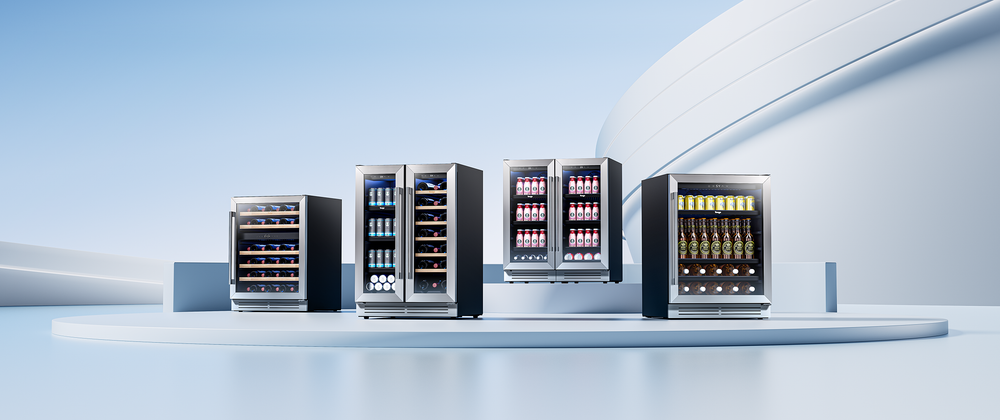

How to Store Red, White & Sparkling Wine in One Wine Fridge
When you're planning a fall gathering, one question comes up quickly: How do you keep your Cabernet Sauvignon from getting too cold while your Sauvignon Blanc and sparkling wine are ready to pour?
One wine fridge might hold bottles for tonight, backups for later, and wines you're saving for Thanksgiving or beyond. Those bottles don't share the same ideal serving temperature, but they can still share the same fridge.
The key is to handle two things separately: storing unopened wine at a steady temperature and bringing each bottle to the right temperature before serving. Once you do that, both single-zone and dual-zone wine fridges can handle a mixed collection without forcing every bottle into the same serving plan.

Key Takeaways
- Storage temperature and serving temperature aren't the same thing.
- A single-zone wine fridge can hold red, white, rosé, and sparkling wine at one steady storage temperature. You can make final adjustments before serving.
- Set dual-zone temperatures based on wine style and serving order, not just color.
- The temperature on your wine fridge's display doesn't necessarily reflect the temperature of the wine inside each bottle.
- Prepare wine in batches. It works better than loading a large number of room-temperature bottles right before guests arrive.
Start by Separating Storage Temperature From Serving Temperature
For longer-term wine storage, consistency matters more than hitting one exact number. The Wine & Spirit Education Trust (WSET) recommends keeping wine intended for aging in a cool, stable environment between about 50 and 59°F. That range helps protect unopened bottles, but it doesn't mean every wine should be served straight from that temperature.
Serving temperature affects how wine tastes in the glass, including its aromas, acidity, texture, and structure. When wine is too cold, its aromas can seem muted and the texture may feel tight. When it's too warm, the alcohol becomes more noticeable while the freshness begins to fade.
A fuller-bodied white, like an oaked Chardonnay, often tastes best lightly chilled, around 50–55°F. Fuller-bodied reds generally show well at about 59–64°F. Sparkling wine needs to be colder, and Comité Champagne recommends serving Champagne at about 46–50°F.
Treat these numbers as starting points. Body, sweetness, style, age, and the producer's guidance all play a part. Bring a bottle close to the recommended range, taste it, and make a small adjustment if needed.
Keep in mind that wine starts warming as soon as it's poured, so the temperature in your glass will continue to change.
Decide How Long Each Bottle Needs to Stay in the Fridge
A bottle you're opening tonight doesn't need the same preparation as one you're saving for Thanksgiving or next year. Before changing your wine fridge settings, sort your bottles into three groups:
- Bottles you'll open first.
- Backup bottles you might open later.
- Bottles that will stay in storage after the gathering.
Keep the first group easy to reach and close to serving temperature. Your backups should stay chilled until you need them, rather than sitting on the bar all evening. And there's no reason to put the third group through repeated temperature changes just because you're preparing a few other bottles for dinner.
This quick sort helps you decide what your wine fridge actually needs to do.
If most of your bottles are staying in storage, keep the fridge at its usual stable setting. Use your regular fridge or an ice-water bucket to finish chilling the whites and sparkling wines you're planning to serve.
If you're opening almost everything within the next day or two, temporarily arranging the fridge around your serving order may make more sense.
Still deciding which appliance should handle your everyday wine storage? This guide explains when a wine fridge makes more sense than a regular fridge.
How to Store Different Wines in a Single-Zone Wine Fridge
A single-zone wine fridge is designed to maintain one temperature throughout the cabinet. It can't keep sparkling wine at serving temperature while holding full-bodied reds at a warmer temperature, but it can provide a steady storage environment for your entire collection.
For unopened red, white, rosé, and sparkling wines, a setting near 55°F is a practical starting point. It falls within the commonly recommended 50–59°F storage range and doesn't push any one style toward an extreme.

You can adjust the setting slightly based on what's in your collection, but stability matters more than changing the temperature every time you plan to open a different bottle.
Constant adjustments rarely help because the air inside the fridge and the wine inside each bottle don't change temperature at the same speed.
Depending on your model, the control panel may display the selected temperature or a reading from a sensor inside the cabinet. Wine inside a standard 750 mL bottle takes longer to warm up or cool down than the air around it.
That means your fridge may return to its set temperature after you close the door, while newly loaded bottles are still several degrees warmer.
You'll notice this more when you add several room-temperature bottles at once. Instead of lowering the temperature setting or repeatedly opening the door to check the display, give the fridge time to cool the bottles and stabilize. Loading bottles in smaller batches, when practical, can also help reduce the cooling demand.
How you arrange the shelves matters, too. Keep air vents and circulation paths clear, and avoid pressing wide bottles against the back wall or filling every available gap.
Champagne, Burgundy, and some Rhône and other sparkling-wine bottles are wider than the standard Bordeaux-style bottles often used to calculate advertised capacity. With a mixed collection, you may fit fewer bottles than the stated maximum, especially if you need to adjust or remove shelves.
With a single zone, handle the final serving temperature outside the fridge:
- Sparkling wine and crisp whites: Give them an extra chill in your regular fridge or an ice-water bucket.
- Fuller-bodied whites: They may need only a small adjustment from storage temperature.
- Light-bodied reds: They're often close to serving temperature straight from the wine fridge.
Fuller-bodied reds: Take them out shortly before serving and let them warm gradually if needed.
Avoid placing wine near a heater, oven, fireplace, or sunny window to speed up warming. A gradual temperature change is better than exposing the bottle to sudden heat.
A single-zone wine fridge is a good fit if your main goal is stable storage, your collection leans toward one wine style, or you don't mind making small adjustments before opening a bottle.
Its job is to give you a consistent storage environment. Those last few degrees are part of serving preparation, not a reason to keep changing the temperature of the entire cabinet.
How to Configure a Dual-Zone Wine Fridge
A dual-zone wine fridge has two temperature-controlled compartments, but the best setup depends on how you plan to use them.
You can organize the zones for everyday storage, near-term serving, or a combination of both. Automatically separating bottles into "reds" and "whites" overlooks the differences within each category.
Before choosing your settings, check your model's specifications. Dual-zone doesn't always mean both compartments can be set anywhere within the fridge's full temperature range.
Some models have different minimum and maximum temperatures for each zone, require a minimum difference between settings, or use a shared cooling system that affects how each compartment recovers after the door opens. Your owner's manual will tell you which zone can run colder and which temperature combinations are supported.
For everyday mixed storage, keep both zones within a relatively narrow, stable range. One zone can be slightly cooler for sparkling wine, rosé, and whites, while the other stays a little warmer for reds and bottles you're saving.
This way, you'll have less to adjust before serving without keeping either zone at an unnecessarily extreme temperature.
For a gathering within the next day or two, you can give each zone a different purpose:
| Zone Purpose | Appropriate Wines | Practical Setting Strategy |
|---|---|---|
| Colder service zone | Sparkling wine, rosé, Sauvignon Blanc, Pinot Grigio, and other light or crisp whites | Bring bottles you’ll open soon closer to serving temperature while keeping long-term stock elsewhere. |
| Moderate storage and service zone | Fuller-bodied whites, Pinot Noir, Merlot, Cabernet Sauvignon, and mixed long-term inventory | Maintain a stable middle range, then let individual reds warm gently if needed. |
The colder zone shouldn't automatically hold every white wine. An oaked Chardonnay may taste better at a temperature closer to a lightly chilled Pinot Noir than to an ice-cold sparkling wine.
Similarly, a lighter red like Beaujolais or some Pinot Noir may benefit from a little chilling, while a structured Cabernet Sauvignon generally needs a warmer serving temperature. Grouping bottles by body, structure, and serving temperature works better than grouping them by color alone.

It also helps to separate party preparation from long-term storage.
A colder zone set near sparkling-wine serving temperature can be useful for bottles you're opening soon, but you don't need to keep your entire sparkling-wine collection at that temperature for months. Keep bottles you're saving within a stable, cellar-style range and move them into the colder zone before your gathering.
Inside each compartment, organize bottles around easy access and airflow. Place the next bottles you'll open where you can reach them without moving everything else. Keep long-term bottles in spots you won't need to disturb as often, and avoid blocking the fans, vents, or temperature sensors mentioned in your manual.
Wide bottles affect capacity here, too. Champagne and Burgundy bottles can take up more shelf space than standard Bordeaux bottles. Packing them tightly side by side may also restrict airflow.
If you need to move or remove a shelf, estimate capacity based on the bottles you actually own, not just the maximum number listed in the product specifications.
After changing a temperature setting or loading several new bottles, give both zones time to stabilize. The cabinet air may cool down first while the wine inside the bottles takes longer to reach the new temperature. Repeatedly opening the door to check can slow that process.
A dual-zone wine fridge works best when each zone has a clear purpose. For everyday use, that might mean slightly cooler and slightly warmer storage. Before a gathering, it might mean a service-ready zone and a stable reserve zone.
You'll have fewer last-minute adjustments while keeping the bottles you're saving in a consistent storage environment.
If your collection regularly includes sparkling wine, whites, and reds, a tall dual-zone wine fridge can provide more usable separation without requiring multiple appliances.

Organize up to 89 bottles with adjustable shelves and two independently controlled 40–65°F zones for reds, whites, and sparkling wines. Front ventilation allows built-in or freestanding placement.
A 24-Hour Wine Fridge Timeline for Fall Entertaining
The day before your gathering, decide which wines you'll serve and when you plan to open them.
You don't need to prepare every bottle in your collection. Choose the ones you realistically expect to open, then add a reasonable number of backups for each part of the meal.
Start by checking how warm the bottles are. Wine that's already stored at 55°F won't need as much preparation as a bottle that's been sitting in a 72°F kitchen.
Starting temperature, bottle size, how full your fridge is, and wine style all affect how much preparation you'll need.
If you're adding room-temperature bottles, start early enough for the fridge and wine to stabilize before serving. Keep airflow paths clear and place your first-round bottles where you can reach them without disturbing the rest of your collection.
A few hours before guests arrive, move sparkling wine, rosé, and crisp whites into the colder zone or your regular fridge for their final chill.
Keep reds at a stable temperature instead of placing them on the bar too early. If a fuller-bodied red needs to warm slightly, take it out closer to serving time so it doesn't spend hours near a heater, cooking area, or bright party lighting.
For Champagne or another sparkling wine that needs a final chill, an ice-water bucket works well. The water fills the gaps between the ice and the bottle, creating better contact than ice alone.
Comité Champagne recommends chilling Champagne in an ice-water bucket for about 20–30 minutes or placing it in the fridge for a few hours before serving.
Before opening the first bottle, look beyond the control panel. Your fridge may have reached its set temperature while the wine inside the bottles is still adjusting.
A bottle thermometer can be helpful if you entertain often, but tasting is still a useful final check. If the aromas seem muted and the texture feels tight, give the wine a little time to warm. If it tastes overly warm or the alcohol seems too noticeable, cool it gently.
During the gathering, bring wine out in batches. Keep only the bottles you're currently pouring at the bar, and leave the next round and your backups in the wine fridge.
This helps prevent unnecessary warming and saves guests from repeatedly opening the fridge to search through your collection.
Arrange the Wine Fridge Around the Order of Service
Once you've planned the temperatures, think about where each bottle should go. A little organization now can save you from searching through the fridge when guests arrive.
Keep sparkling wine and the first whites you'll serve where they're easiest to reach. Reds for the main course can go in the second row or on the next shelf. Backup bottles and long-term storage wines should stay in spots you won't need to disturb every time someone opens another bottle.
The same idea can help you decide where to put a wine fridge in relation to your counter, glassware, dining table, and guest traffic.
Your serving station and wine fridge have different jobs. The station only needs the wine you're pouring right now, along with glasses, napkins, a corkscrew, and other essentials.
The wine fridge keeps everything else stored at an appropriate temperature until it's needed.
If you're hosting a Halloween gathering with children, keep alcoholic drinks clearly separate from soda, juice, candy, and nonalcoholic options. Shelf placement and labels can help prevent confusion, but they don't replace adult supervision.
Reset the Wine Fridge After the Party
Once guests head home, return your wine fridge from its temporary party setup to its normal storage settings.
Sort your unopened bottles into everyday drinking, Thanksgiving plans, and longer-term storage. It's also a good time to note which wines disappeared quickly and which went untouched, so you'll know what to restock before the next holiday.
Reseal opened bottles and store them upright in the fridge. Keeping them sealed and chilled helps slow changes in the wine after opening. For sparkling wine, use a stopper made to help retain carbonation.
How long an opened bottle stays enjoyable depends on the wine style, how much is left, and how well it's preserved. There's no single storage deadline that works for every red or white wine.
Wipe condensation off the bottles, clean up any drips on the shelves, and check that everything has been returned to its proper place.
Storing red, white, rosé, and sparkling wine together involves more than choosing the number of temperature zones.
A single-zone wine fridge works well when stable storage is paired with a simple serving plan. A dual-zone model gives you more flexibility when you regularly open different wine styles.
The best setup depends on the wines you enjoy, how long you plan to keep them, and when you expect to open them.
Once you've figured that out, your wine fridge becomes more than a place to store bottles. It's part of a practical home setup that keeps the right wine ready when it's time to pour.
Still comparing capacities, installation types, and temperature-zone layouts? Explore Yeego wine fridges to see which setup works best for your space and routine.
Frequently Asked Questions
1. Should wine bottles always be stored horizontally?
Not always. It depends on the type of closure.
Bottles sealed with natural cork are generally stored on their sides for longer periods so the wine stays in contact with the cork. This helps reduce the risk of the cork drying out and losing its seal.
Screw-cap bottles don't need to be stored horizontally and can stay upright.
Synthetic closures and sparkling-wine bottles may have different storage recommendations, so follow the producer's guidance when available.
Whatever the closure, make sure each bottle fits securely on the shelf. Never force a bottle into a rack that doesn't properly support it.
2. Can beer, soda, spirits, or food be stored in a wine fridge?
You can usually store sealed beer and soda temporarily if the fridge's temperature range suits the drinks and the containers fit securely on the shelves.
Just remember that a typical wine-storage setting may be warmer than the temperature you'd want for beer or soda.
Unopened distilled spirits generally don't need refrigeration.
Perishable food is different. Don't store perishable food in a wine fridge unless the appliance is specifically designed and rated to maintain food-safe temperatures.
Wine storage temperatures are usually above the 40°F maximum recommended for refrigerated perishable foods, so a wine fridge isn't a substitute for your regular fridge.
3. Can dessert wine and fortified wine be stored in the same wine fridge?
Yes. Unopened dessert and fortified wines can generally share a stable storage environment with your other sealed bottles.
Their ideal serving temperatures may differ, so you might still need to make a final adjustment before opening.
Once opened, how long they stay enjoyable varies widely by style. An oxidatively aged fortified wine may last longer than a delicate sweet wine, but higher alcohol content doesn't mean every opened bottle can be stored indefinitely.
Reseal the bottle and follow the producer's recommendations for storage after opening.
4. Does UV-resistant glass make direct sunlight safe?
No. UV-resistant glass can reduce some of the ultraviolet light reaching your bottles, but it doesn't block all light or prevent sunlight from warming the cabinet and surrounding area.
Keep your wine fridge away from prolonged direct sunlight whenever possible. This helps reduce the extra heat around the appliance while giving light-sensitive wines more protection.
Think of UV-resistant glass as an added layer of protection, not a reason to place your wine fridge next to a sunny window.