
Where to Put a Beverage Fridge in an Open-Plan Home
Key Takeaways
- A good spot works for three routes: restocking, guest access, and cleanup.
- The spot closest to the sofa isn’t always the easiest. You may end up carrying cases of drinks across the living room, or the open door may block a main walkway.
- Your fridge’s operating footprint includes the open door, handle, standing space, and room for others to pass.
- The edge of the kitchen or the transition between the kitchen and living room are usually worth testing first, but no single spot works for every layout.
- Installation type, ventilation, electrical access, and the manufacturer’s requirements still matter.
- Lock in the location before deciding between a 15-inch, 24-inch, or another size.

Open-plan homes can seem to offer plenty of places for a beverage fridge. Maybe it’s a space under the kitchen counter, a wall beside a sideboard, a corner of the living room, or the area between the kitchen and seating area. They can all look like a fit on paper.
The trouble usually shows up once you start using the fridge.
A fridge near the living room keeps drinks within easy reach, but restocking may mean carrying cases of soda and bottled water across the room. A spot closer to the kitchen makes restocking and cleanup easier, but guests may end up walking through the food-prep area every time they want a drink. And a location that looks completely clear with the door closed can suddenly feel cramped once the door is open and someone is standing in front of it.
So don’t start with whichever wall happens to have enough space. Follow the drinks instead: where they come from, how people reach them, and where empty bottles, cans, and glasses go afterward.
In many open-plan homes, a practical location sits just outside the busiest part of the kitchen while still staying close to extra drink storage and the main gathering area. Think of that as a starting point, not a rule. The best location still depends on traffic flow, door clearance, installation requirements, and how you use the space day to day.
Why placement is more complicated in an open-plan home
Even without walls separating every room, your home still has different activity zones. The kitchen has cooking and prep areas. Your main refrigerator and pantry are part of the restocking routine. The dining area needs enough room for chairs to move, while the living room has its own seating and walkways.
A beverage fridge can become a busy spot throughout the day. You might grab bottled coffee in the morning, sparkling water at lunch, juice or soda after school, and beer in the evening. When friends come over, several people may open the fridge throughout the gathering and take a little longer deciding what they want.
That’s how a location that looks perfectly placed between the kitchen and living room can become a bottleneck. If it sits along the path everyone uses to move between the two spaces, every drink run can interrupt the flow of the room.
Your fridge also needs to work on a regular weekday, not just on party night. You might host fifteen people only once or twice a year but restock water, soda, and cold brew every week. Planning around your biggest gathering can make the fridge frustrating for the other 360 days.
Start with three beverage routes
Before you start measuring appliances, make a quick floor-plan sketch or use a note on your phone to trace three beverage routes. You don’t need exact measurements yet. For now, you’re simply looking at how drinks move through the space and where those movements might get in each other’s way.
The restocking route: how drinks reach the fridge
The restocking route usually starts at your garage, entryway, pantry, or main refrigerator and ends at the beverage fridge.
Think about how drinks actually come into your home. If you buy bottled water, soda, or beer by the case, restocking involves more than adding a few cans at a time. You may be carrying boxes through the room, opening the fridge, rearranging shelves, and putting extra drinks back into storage.
A beverage fridge beside the living room may be convenient for guests but less convenient to refill. Grocery bags and cases have to cross the seating area, and a bigger restock can temporarily take over part of the room.
A location near the edge of the kitchen or between the kitchen and living room usually keeps the fridge closer to your pantry and main refrigerator. It can also make it easier to move already-chilled drinks over or chill another batch before guests arrive.
When evaluating the restocking route, ask:
- Where do you normally keep extra drinks?
- Do you usually restock a few bottles or a whole case?
- Would you have to carry drinks around furniture, through the seating area, or up and down stairs?
- Is there somewhere nearby to set grocery bags or boxes while you restock?
- Would an open fridge door get in the way of someone cooking or walking through the room?
A location that works well for a few cans at a time may feel much less convenient when you’re stocking up for a busy weekend.
The guest-access route: how people reach the drinks
The guest-access route starts at the sofa, dining table, or entertainment area, goes to the beverage fridge, and leads back to the gathering space.
You may be adding a beverage fridge because you want guests to grab their own drinks without constantly walking into the kitchen. That makes sense, but convenience isn’t just about putting the fridge as close as possible.
Picture a typical get-together. One guest opens the fridge and bends down to check the lower shelves. Someone else waits behind them. At the same time, you’re carrying food from the kitchen to the dining table. If all three things can’t happen comfortably at once, that spot may become a bottleneck.
Visibility helps too. If the fridge holds beer alongside bottled water, juice, and soda, keep the drinks people reach for most often easy to see and grab. That can shorten the time spent browsing with the door open and make self-service easier for everyone.
Things to consider:
- Do guests have to walk through the main cooking area between the range, sink, and refrigerator?
- Does the open fridge door extend into a main walkway?
- Can someone still pass behind a person using the fridge?
- Is the appliance too close to the TV or main seating area?
- Could the interior light be distracting during movies or evening gatherings?
Saving guests a few steps is useful, but not if every trip to the fridge gets in everyone else’s way.
The return route: where empty containers go
Once drinks leave the fridge, the cans, bottles, and glasses still have to go somewhere. After an hour or two of hosting, it’s easy for empty containers, used glasses, and half-finished drinks to start collecting around the room if there isn’t a simple cleanup plan.
Consider:
- Where will empty bottles and cans go?
- How will used glasses get back to the kitchen?
- Is there somewhere to set down an opened but unfinished drink?
- Can you clean up spills easily?
- Can a recycling bin sit nearby without getting in the way?
You don’t need a sink or a full built-in bar beside the beverage fridge. A simple setup can be enough, such as a recycling bin near a sideboard or a fridge location that stays close to your normal cleanup route.
A spot that makes drinks easy to grab but awkward to clear away only solves half the problem.
Measure the operating footprint, not just the appliance
Once you’ve narrowed the options to two or three locations, start measuring. One of the easiest mistakes to make is checking only the fridge’s width and depth while the door is closed.
A 24-inch beverage fridge might fit neatly against a wall but hit a dining chair when the door opens. A narrow 15-inch model might fit into a small gap but leave no room for someone to stand in front without blocking the walkway between the kitchen and living room.
Start with the appliance’s actual dimensions. Check whether the listed depth includes the door and handle, whether the plug requires additional space behind the unit, and whether baseboards, flooring transitions, or other obstacles affect the available space.
Then account for the full operating footprint:
- Door-opening range
- Handle projection
- Space to stand, bend down, and reach inside
- Room to adjust shelves or remove taller containers
- Enough passing space behind someone using the fridge
Painter’s tape is an easy way to test the layout before buying. Mark the appliance’s width and depth on the floor, then estimate the door swing. Have one person stand in front as if they’re choosing a drink while someone else walks from the kitchen to the living room.
A few minutes of testing can catch what dimensions and product photos can’t.
Check the surrounding furniture too. The door could run into a sideboard drawer, wall corner, dining chair, sofa arm, end table, or another appliance. A door that technically opens still may not leave enough room to comfortably remove a shelf or larger bottle.
If you have the space, a small surface nearby can also be useful for setting down glasses, an opener, or a few drinks before carrying them to the table. It doesn’t need to turn into a second kitchen. A small section of countertop or the top of a sideboard may be all you need.
Comparing four common locations
Every layout is a little different, but most placement decisions come down to four general areas.
| Location | Restocking Convenience | Guest Access | Main Trade-Off | Best For |
|---|---|---|---|---|
| Kitchen Edge | High | Moderate | Guests may still enter the kitchen circulation area, especially when food preparation is underway. | Everyday family use, frequent restocking, and keeping drinks close to pantry storage and cleanup. |
| Kitchen–Living Transition Area | High | High | The appliance must stay outside the room’s main traffic path and preserve enough space for the open door. | Households that want a practical balance between kitchen access and guest self-service. |
| Dining-Side Location | Moderate | High | Door swing and user standing space may interfere with dining chairs or movement around the table. | Dinner hosting, casual entertaining, and homes where drinks are usually served with meals. |
| Living-Room Side Wall | Low to Moderate | High | Longer restocking and recycling routes, with greater sensitivity to operating sound and interior lighting. | Movie nights, sports viewing, gaming, and entertainment-focused households. |
Kitchen edge
The edge of your kitchen can free up space in your main refrigerator while keeping restocking and cleanup convenient. “Kitchen edge” doesn’t mean the area between the range, sink, and main refrigerator. Think of the end of a cabinet run, the side of a breakfast area, or another spot just outside your primary work zone.
This often works well if you use the beverage fridge throughout the day and usually host smaller groups. But if guests still have to walk through an active food-prep area to reach it, the location may not solve the traffic problem.
Kitchen–living room transition area
The transition area is usually the first spot worth testing. It may be close enough to the pantry for easy restocking while still letting guests get a drink without walking into the busiest part of the kitchen.
But being “in the middle” doesn’t automatically make it the best location. Transition areas are often the same paths you use to move between the kitchen, dining area, stairs, and living room. Once the fridge door opens or two people stop in front of it, a generous walkway can suddenly feel tight.
If your taped-floor test shows that people can still move comfortably while the fridge is being used, this area can offer a good balance between everyday convenience and weekend hosting.
Dining-side or sideboard area
If entertaining at home usually means dinners, potlucks, or casual meals, a beverage fridge near the dining area may make more sense than one beside the sofa.
This setup can also keep glassware, napkins, and a few serving essentials nearby while helping guests stay out of the kitchen. Just watch the dining-chair clearance. If someone has to move a chair every time the fridge opens, the setup can quickly become frustrating during meals.
Restocking distance matters too. If your extra beverages are stored in the garage or pantry, make sure refilling the fridge doesn’t require repeated trips across the entire space.
Living-room side wall
A living-room side wall can work well if sports, movies, and games are a regular part of your routine. A well-planned home beverage station for movie nights can keep drinks nearby, cut down on trips back to the kitchen, and add useful storage without requiring a full bar setup.
This location deserves extra attention to operating sound, interior lighting, and how noticeable the appliance is in the room. Normal refrigerator sounds may fade into the background in a kitchen but feel more noticeable beside a quiet seating area. Avoid placing the fridge directly beside the sofa or between the TV and your main seating.
You’ll still need a plan for restocking and recycling. A living-room location may solve guest access while making it harder to bring full cases in and empty containers out. It works best when all three routes are still manageable.

Run a five-step placement test before you buy
Before choosing a specific fridge, use this quick test to make sure the location really works.
1. Keep two or three locations under consideration
Don’t choose a model just because one opening happens to be 15 or 24 inches wide. Compare a few possible locations first, then choose the appliance that works best in the strongest spot.
2. Walk the three routes
Walk from your extra drink storage to the possible fridge location, from the main seating area to the fridge, and from the fridge to recycling or cleanup.
Notice whether you have to move around furniture, cross the kitchen work zone, or squeeze through a narrow aisle.
3. Mark the full operating area
Use tape to outline the fridge, approximate door swing, standing area, and passing space.
This shows whether people can comfortably use the fridge, not simply whether the appliance fits.
4. Simulate a busy moment
Have one person open the fridge and look for a drink while someone else carries something from the kitchen to the living room.
If either person has to stop, turn sideways, or change their route, the location may become frustrating during a real gathering.
5. Check the exact model requirements
Once a location passes the everyday-use test, check the exact model’s dimensions, installation type, ventilation requirements, electrical needs, door design, and operating instructions.
Built-in, freestanding, and dual-installation models are designed for different setups. Don’t enclose a freestanding-only model simply because it physically fits the opening. Clearance and environmental requirements vary by appliance, so always follow the manufacturer’s instructions for the specific model.

Five placement mistakes to avoid
Picking the spot closest to the sofa
It shortens the walk for guests, but it can make restocking, recycling, and cleanup harder. Walking a few extra steps for a drink may be easier than carrying full cases across the living room every week.
Measuring only the available width
The fridge may fit while the door, handle, standing space, and surrounding traffic don’t. In corners, dining areas, and narrow passages, the full operating footprint often matters more than the listed width.
Putting the fridge in the main kitchen work route
A location near the range, sink, and main refrigerator may be easy to restock, but guests can end up competing with cooking and serving traffic. The outer edge of the kitchen is usually a better place to test than the center of the work zone.
Planning around the biggest party of the year
Your biggest gathering shouldn’t determine how the fridge works for the rest of the year. Start with everyday drinks and routines, then use staged restocking or temporary drink storage when you need extra capacity for a larger event.
Forgetting where empty bottles and glasses go
If guests can easily grab a drink but have nowhere convenient to leave the empty container, cans, bottles, and cups can quickly pile up. Plan the cleanup route at the same time as guest access.
Which spot fits your home?
For everyday use, the kitchen edge or transition area is often a practical place to start. Both keep the fridge relatively close to your pantry and cleanup area while freeing up space in your main refrigerator.
If you regularly host dinners or small potlucks, test the kitchen–living transition area and the dining side of the room. The goal is to give guests easy self-service access without taking over dining-chair clearance or blocking a main walkway.
If sports, movies, and game nights are a big part of your routine, a living-room side wall may be worth considering. Just pay closer attention to sound, lighting, restocking distance, and recycling.
If you’re in a smaller open-plan home or apartment, protect the main walkway first. A fridge that sits close to everything may sound convenient, but not if it reduces usable dining, seating, or walking space.
Once you’ve settled on a spot, use a beverage fridge size guide to compare small, 15-inch, 24-inch, or other models against your available space, everyday drink storage needs, and the model’s requirements.
Let the location pick the fridge, not the other way around.
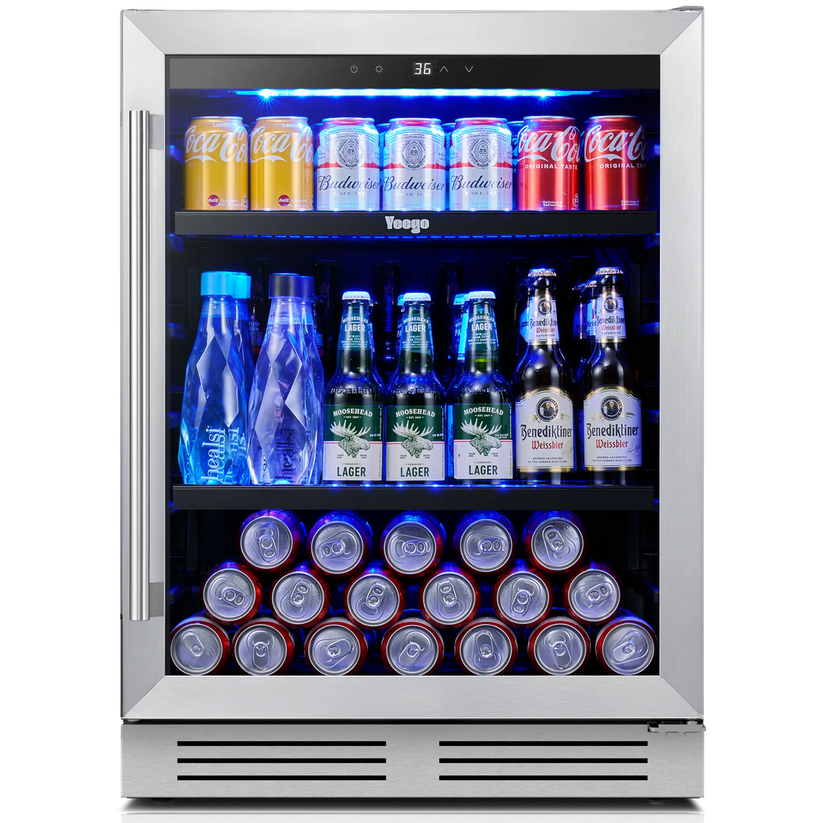
Yeego 24" Beverage Cooler
Follow the drinks through your home
There’s no single best place for a beverage fridge in every open-plan home. The kitchen edge may work well when easy everyday restocking matters most. A living-room wall can make sense if movies, games, and entertaining are a big part of your routine. And the transition between the kitchen and living room is often the strongest place to test first.
The best location lets drinks move naturally through your home: from storage to the fridge, from the fridge to you and your guests, and from the gathering area back to recycling and cleanup without constantly interrupting everything else happening in the room.
Before choosing a model, walk those three routes and mark the fridge’s full operating footprint with tape.
Once the location works, you can compare Yeego beverage fridges by size, installation type, capacity, and other features that matter for your space.
If restocking feels manageable, guests can grab a drink without blocking the room, empty containers have somewhere to go, and the setup meets your model’s requirements, you’ve found a spot that makes everyday life and hosting easier.
Frequently asked questions
1. How often should I clean my beverage fridge?
There isn’t one cleaning schedule that works for every home. It depends on how often you use the fridge, spills or leaking containers, and how much dust collects around the appliance.
Clean spills when they happen and wipe down the handle and door gasket regularly. Check and clean ventilation openings or condenser areas according to the manufacturer’s instructions.
2. Does frequent door opening increase beverage fridge energy use?
Yes, it can. Opening the door frequently or leaving it open for a long time lets warmer room air enter the fridge, so the appliance has to work to bring the interior back to the selected temperature.
The actual effect varies based on room temperature, how often the door is opened, how long it stays open, how full the fridge is, gasket condition, and the appliance itself.
During gatherings, it’s more practical to keep popular drinks easy to see and reach so guests don’t have to leave the door open while deciding.
3. Does the advertised can capacity equal the number of drinks I can actually store?
Not always. Advertised capacity is typically based on a specific can size and loading arrangement. Slim cans, bottles, larger containers, and mixed drink sizes can change how much actually fits.
Changing shelf positions or leaving more room between drinks for easier access can also reduce usable capacity.
When comparing models, look at the stated capacity along with the interior dimensions, shelf layout, and adjustability instead of relying on the can count alone.
4. Is a built-in or freestanding beverage fridge better for an open-plan home?
Neither type is automatically better. The right choice depends on where you plan to install it.
Built-in models are made for installation within cabinetry when their specified requirements are met. Freestanding models should be installed with the clearances required by the manufacturer.
Choose the type that matches your planned location, and always check the instructions for the specific model before installation.
5. Do I need a dual-zone beverage fridge?
Not necessarily. A single-zone fridge may be enough if most of the drinks you store are kept within a similar temperature range and you prefer one continuous storage area.
A dual-zone model is more useful when you regularly store drinks that you prefer to keep at different temperatures.
Before choosing one, compare each zone’s temperature range, capacity, and controls rather than assuming two zones will automatically be more useful for you.