
How to Stock Game Day Drinks Without Overbuying: Build a Lineup Guests Will Actually Drink
Key Takeaways
- Plan game day drinks around what your guests actually like, how long you’re hosting, what you’re serving, and when people arrive, not headcount alone.
- Build around a reliable core, a few purposeful alternatives, and a real nonalcoholic selection instead of buying too many similar options.
- Not everything you buy needs to be chilled or on display at once.
- Halftime is often the best time to check what’s moving and restock based on what guests are actually choosing.
- A good plan doesn’t mean ending the night with an empty fridge. It means keeping popular drinks available without opening more than you need.
It’s not even halftime, and the light lager and sparkling water are already gone. Meanwhile, several rows of IPA and flavored hard seltzer are still sitting untouched in the beverage fridge.
That usually doesn’t mean you bought too little. It means the mix didn’t match what your guests actually wanted.
Many game day drink lists start with headcount, then turn that number into cases of beer, soda, and water. But two gatherings with the same number of guests can need very different setups. Drink preferences, arrival times, food, designated drivers, how long people stay, and even overtime can all change what gets picked.
A better approach is to give each beverage a job, estimate demand by preference, and restock as the game moves along. The goal isn’t to cram the fridge full. It’s to keep the drinks people want cold and easy to grab when they want them.

Why Game Day Drink Plans Go Wrong
The most common mistake is treating every guest like the same kind of drinker. Ten guests don’t mean ten beer drinkers. Some may prefer hard seltzer, some may stick with nonalcoholic drinks, and others may move between beer, soda, sparkling water, and still water throughout the game.
Using one drinks-per-person estimate for the whole group can leave you with too much of one category and not enough of another.
It’s also easy to confuse variety with usefulness. Five IPAs, three seltzer flavors, and several limited-edition sodas may look generous, but each one might appeal to only one or two people. Useful variety covers different preferences. It doesn’t fill the fridge with several drinks that serve basically the same purpose.
It also helps to separate three things: what you buy, what needs to be cold, and what guests need access to right now. Putting everything in the beverage fridge before kickoff can make the selection harder to scan and leave less flexibility for later.
Instead, bring more drinks into the mix as demand becomes clear. If your gathering spreads across the kitchen, garage, patio, or viewing area, it can also help to give each cooling option a separate job instead of expecting one fridge, cooler, or serving tub to handle everything.
Confirm Four Variables Before You Shop
Actual Guest Preferences
Don’t guess what people will drink based on age or gender. When guests confirm, ask something simple, such as, “What are you most likely to grab on game day: beer, seltzer, soda, or sparkling water?”
That one question can be more useful than buying several backup flavors just in case.
You can loosely group the answers into beer-first guests, seltzer or cider drinkers, people choosing nonalcoholic drinks, and guests without a strong preference. The categories don’t need to be exact. They simply keep one general headcount from deciding the entire shopping list.
Total Hosting Time
Plan for how long people will actually be at your home, not just the official broadcast window. Include pregame arrivals, food before kickoff, halftime, conversation after the game, and possible overtime.
Arrival patterns matter too. If guests trickle in over an hour, the first round is naturally spread out. If everyone arrives ten minutes before kickoff, your drink area needs to handle a much faster rush.
Same headcount, two very different stocking strategies.
The Menu
You don’t need an elaborate drink-pairing plan for game day. Start with core drinks that work across the menu, then make sure there’s enough still water, sparkling water, and other nonalcoholic choices for anyone who wants them.
With salty, fried, or spicy food on the table, keeping plenty of cold, refreshing options within easy reach is especially practical.
If hot food comes out at halftime, drink preferences may shift as people eat. Keep some flexibility instead of deciding the entire second-half lineup before anyone arrives.
Real Refrigerated Capacity
Advertised capacity isn’t always the same as usable beverage fridge capacity. Standard cans, slim cans, glass bottles, and plastic bottles all take up space differently, especially once shelf heights change.
Before shopping, check how much room you actually have, whether the shelves need adjusting, and where you can keep reserve drinks cold.
Also keep cooling time in mind. Loading a large number of room-temperature drinks right before kickoff may take longer to chill than expected, depending on the appliance. Prechill drinks when practical and follow the operating guidance for your specific model.
Installation requirements can also vary. Clearances, ventilation, and suitable placement differ between built-in and freestanding beverage fridges, so confirm the setup before making a beverage fridge part of a permanent game-day space.
Assign Each Beverage a Role Before Choosing Brands
You don’t need to recreate the entire beverage aisle. You just need to cover the main reasons guests reach for a drink.
Think in four simple roles: core drinks, targeted alternatives, nonalcoholic options, and basic hydration.
Core Drinks
Core drinks are the crowd-pleasers. They should appeal to the largest part of your group, work with most of the food, and still be useful at home if a few are left over.
For one group, that might mean light lager and familiar soda. For another, it could be sparkling water, diet soda, or cider.
There’s no universal list. The goal is to identify the few drinks most likely to carry most of the demand.
Targeted Alternatives
Alternatives cover preferences your core lineup doesn’t. That could mean an IPA, hard seltzer, cider, nonalcoholic beer, or unsweetened iced tea.
They don’t need to be stocked in the same quantity as the core.
If only two guests asked for IPA, for example, you probably don’t need several IPA styles. One option can cover that preference without leaving you with multiple half-finished packs afterward.
Nonalcoholic Options and Hydration
Nonalcoholic drinks shouldn’t feel like an afterthought. Sparkling water, soda, iced tea, still water, and appropriately labeled nonalcoholic options can give guests a real selection.
Make these drinks easy to see from the start. Guests who are drinking alcohol may also switch to water or another nonalcoholic option during the game, so keeping them visible makes the setup work better for everyone.
| Beverage Role | Primary Purpose | Selection Standard | Common Examples | Buying Approach |
|---|---|---|---|---|
| Core Drinks | Serve the largest group | Broad appeal and easy to serve throughout the event | Lager, familiar soda, plain sparkling water | Hold the largest share of inventory |
| Targeted Alternatives | Cover specific preferences | Clearly different from the core | IPA, hard seltzer, cider | Buy according to confirmed interest |
| Nonalcoholic Options | Provide a complete alternative lineup | Appealing in their own right | NA beer, iced tea, diet soda | Keep available from the start |
| Basic Hydration | Support the entire gathering | Simple and easy to reach | Still water and sparkling water | Keep visible and replenish consistently |
Estimate Demand Before Converting It Into Cases
A universal drinks-per-person formula can’t account for every group. A more useful planning structure is:
Planned units = estimated demand by preference group + a modest flexible reserve
This isn’t a fixed consumption target. It’s simply a way to think through what each part of your group is likely to choose based on how long you’re hosting, known preferences, the menu, and whether alcohol is being served.
Beer, for example, should be planned mainly around beer-first guests plus some flexibility for people without a strong preference. Seltzer or cider should reflect the guests who actually want it.
Water and sparkling water are different because they can work for everyone, not just guests who aren’t drinking alcohol.
Estimate cans or bottles first, then convert that number into six-packs, 12-packs, or cases. Don’t let the package size decide how much you buy. A case may look convenient or like a better deal, but it can still be too much for a low-demand flavor.
It also helps to have a base plan and a flexible reserve. The base covers confirmed guests and known preferences. The reserve gives you some breathing room for late additions, faster demand, or overtime.
Choose reserve drinks your household will still use after game day, and keep extra packages closed until you actually need them.
Stock According to the Pace of the Game
Pregame: Use the First Round to Validate the Plan
When guests arrive, start with your most broadly liked core drinks and make water and nonalcoholic choices easy to see.
You don’t need to put out every specialty flavor or open your whole reserve before kickoff.
That first round tells you a lot. If one category is moving quickly, you’ll know to prioritize it at halftime. If a specialty drink barely moves, there’s no reason to keep adding more just to make the fridge look full.
First Half: Keep the Core Stable
Once the game starts, the drinks people reach for most should be easy to spot and grab.
Keep core options together instead of scattering them across different shelves, and don’t let reserve drinks block the choices guests are most likely to want.
You also don’t need to react to every empty space. If your core drinks, water, and nonalcoholic choices are still available, keep watching what people actually pick.
Halftime: Adjust Based on What’s Moving
Halftime is often a natural restocking point because people may be getting food, refreshing drinks, or heading back to the fridge at the same time.
See what’s disappearing fastest, what’s barely been touched, and whether water or nonalcoholic drinks need more room.
Then restock based on what’s actually moving.
If lager is going faster than IPA, add more lager rather than bringing both back to the same level. If only one or two cans of a seltzer flavor have been taken, there’s no reason to open another pack yet.

Second Half and Overtime: Open Less Unless You Need It
By the second half, your group’s preferences should be much clearer.
Keep the core and hydration options available, but be more selective about opening new specialty flavors or large multipacks.
If the game goes into overtime, pull from your reserve based on how many guests are still there and what they’re actually drinking.
The idea isn’t to limit choices. It’s simply to avoid opening more than the group needs.
| Game Phase | Main Focus | Signal to Watch | Restocking Response |
|---|---|---|---|
| Pregame | Core drinks, nonalcoholic choices, and water | Guests’ first-round selections | Confirm actual preferences |
| First Half | Keep high-frequency drinks accessible | Which category declines fastest | Restock the core in small batches |
| Halftime | Combined food and drink demand | The difference between popular and low-demand items | Adjust the second-half mix |
| Second Half | Core drinks and hydration | Remaining guests and pace of use | Open less new inventory |
| Overtime | Flexible reserve | Actual remaining demand | Restock only as needed |
Organize the Beverage Fridge Around Access and Restocking
Before game day, put first-round drinks where they’re easiest to see and grab. Popular options shouldn’t be hidden behind reserve stock or scattered across unrelated shelves.
When guests can quickly find what they want, there’s less searching with the fridge door open.
Give water and nonalcoholic drinks just as much visibility as the rest of the lineup. If you’re storing a mix of standard cans, slim cans, and bottles, adjust the shelves as needed, but don’t squeeze in extra drinks at the expense of proper loading or airflow.
Always follow the manufacturer’s loading and ventilation guidance for your specific appliance.
Keep reserve drinks separate from the first round. They can sit in a less-accessible part of the fridge or another suitable prechilled location until you need them. That makes it easier to see what guests are actually choosing and helps keep unopened extras for later.
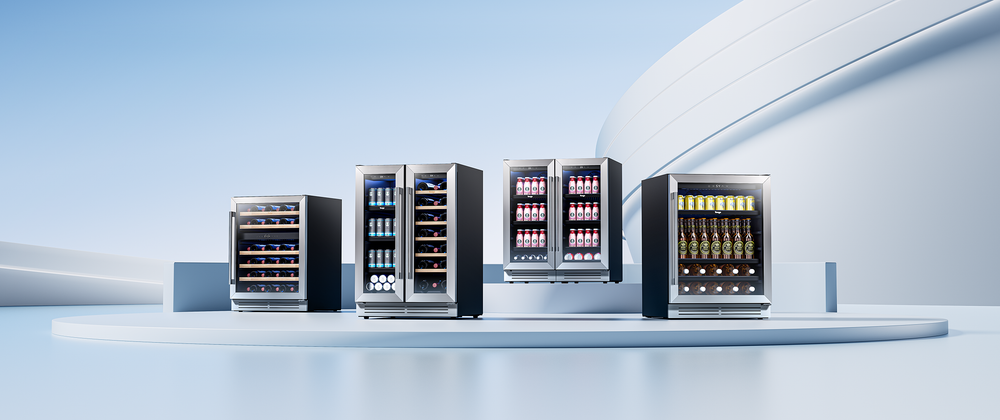
A dedicated beverage fridge can also make game night easier when it’s placed near a media room, garage bar, or family entertainment area. It can support a dedicated game-night drink setup by keeping cold drinks closer to where people are watching.
Guests can help themselves, and you can check what needs restocking without making repeated trips back to the kitchen.
A 12-Person Game Day Example
Imagine a home watch party with 12 adult guests. People will arrive during the hour before kickoff, hot food will come out at halftime, and some guests plan to stay after the game.
Beforehand, six guests say they usually choose beer, two prefer seltzer or cider, three plan to stick with nonalcoholic drinks, and one doesn’t have a strong preference.
Instead of multiplying all 12 guests by one general serving estimate, build the lineup around those preferences.
Beer should mainly cover the six beer-first guests, with a little flexibility for the undecided guest. Seltzer or cider can stay focused on the two people who asked for it.
The nonalcoholic lineup needs to work for the three guests who aren’t drinking alcohol, but water, sparkling water, soda, and other nonalcoholic choices can also serve the rest of the group throughout the game.
You might choose one easy, crowd-pleasing beer as the core and a smaller amount of something more distinctive as an alternative. Seltzer or cider can reflect a known preference rather than turning into a large mixed pack of flavors.
For nonalcoholic drinks, include water, sparkling water, and at least one option guests would be happy to choose on its own rather than relying on one standard soda.
Before guests arrive, stock the fridge with the first round of core drinks plus the full nonalcoholic selection. Keep additional packages closed for later.
If the core beer moves quickly, add more. If the alternative beer or seltzer barely moves, there’s no need to refill it automatically.
A successful setup doesn’t mean ending the night with an empty fridge. It means the popular drinks stayed available when people wanted them, everyone had good nonalcoholic choices, and you didn’t end up with several opened packs nobody really wanted.
Reducing Leftovers Does Not Mean Buying the Bare Minimum
Buying too little just trades one problem for another. The better move is to limit low-interest flavors, open reserve drinks only when you need them, and put most of your extra buffer into drinks your household already enjoys.
After the game, make a quick note of what disappeared first, what barely moved, whether the nonalcoholic selection felt right, and when the biggest rush happened.
That information about your own group will be more useful next time than another generic party formula.
A few habits tend to create unnecessary leftovers: guessing preferences based on age or gender, buying a different flavor for every guest, assuming everyone will drink alcohol, hiding water where no one sees it, opening every multipack before kickoff, and filling every empty fridge space automatically.
More choice can look generous, but it often creates more half-open packages and more work for the host.
The Best Game Day Lineup Is Not the Biggest One
A smart game day setup doesn’t keep the beverage fridge completely full just for the sake of looking stocked. It keeps the right drinks available at the right points in the gathering.
Start with what your guests actually like. Build around a reliable core, add a limited number of alternatives, and make nonalcoholic drinks a real part of the lineup.
Then restock based on what happens during pregame, the first half, halftime, and overtime instead of trying to predict everything before kickoff.
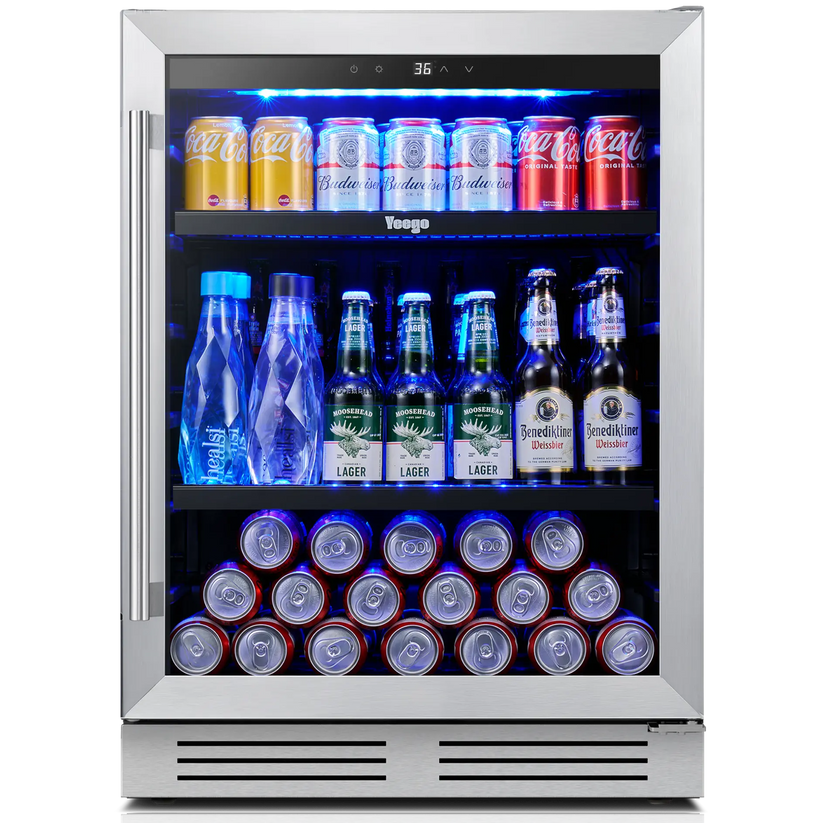
Yeego 24" Beverage Cooler
If watch parties are a regular part of your routine, Yeego beverage fridges can give you a dedicated cold-storage spot closer to where everyone gathers. Drinks stay organized and easy to see, guests can grab what they want, and you can spend less time running back to the kitchen.

Frequently Asked Questions
1. Can I add room-temperature cans to the beverage fridge during the game?
Yes, but don’t expect a large batch to become cold right away. Adding many warm drinks at once gives the appliance more heat to remove and can increase the time needed to return to its normal temperature.
When possible, prechill reserve drinks or add them in smaller batches. Keep newly added drinks separate from ready-to-serve ones so guests know what’s already cold. Always follow the operating guidance for your specific appliance.
2. How can I accommodate guests who need sugar-free, caffeine-free, or ingredient-specific options?
Ask about those needs before the gathering whenever possible, and keep original packaging and ingredient labels available.
Don’t assume diet, zero-sugar, caffeine-free, nonalcoholic, and other specialty products are interchangeable. Keeping a small, clearly organized section makes it easier for guests to identify the option that works for them.
If someone needs to avoid a specific ingredient or alcohol completely, let them check the product label rather than relying only on the category name.
3. Do I still need cups and ice if the drinks are already chilled?
Not always, but keeping a small supply nearby gives guests more flexibility.
Cups can be useful for smaller servings or for anyone who prefers not to drink directly from a can or bottle. Ice can stay optional rather than going into every drink automatically.
Keep cups, ice, bottle openers, and other serving tools together near the drink area so guests don’t have to search for them.
4. How should I manage condensation from cold cans and bottles in a media room?
Keep coasters, rimmed trays, or an easy-to-clean water-resistant mat near the drink area.
Avoid setting cold cans or bottles directly beside wood furniture, remote controls, or electronics. Giving guests one obvious place to set their drinks is much easier than wiping condensation from several surfaces throughout the game.